

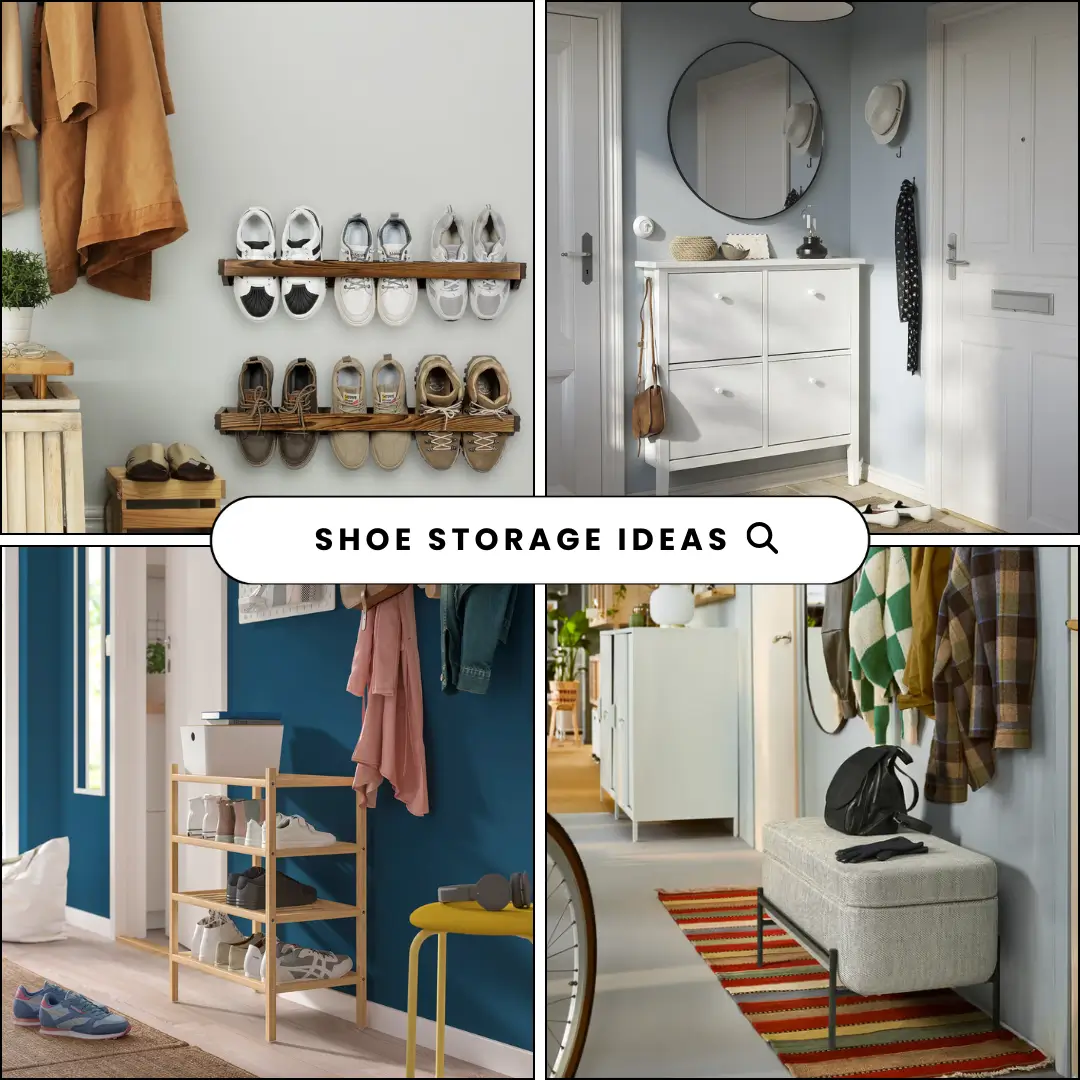
Shoes have a funny way of multiplying. One practical pair becomes five, then suddenly you’re shuffling through a pile of sneakers, boots, and barely-worn heels every time you head out the door.
And while the dream is a perfectly organized closet with infinite shelving, real life usually involves tight entryways, overworked wardrobes, and storage that has to pull double duty.
PIN FOR LATER 📌
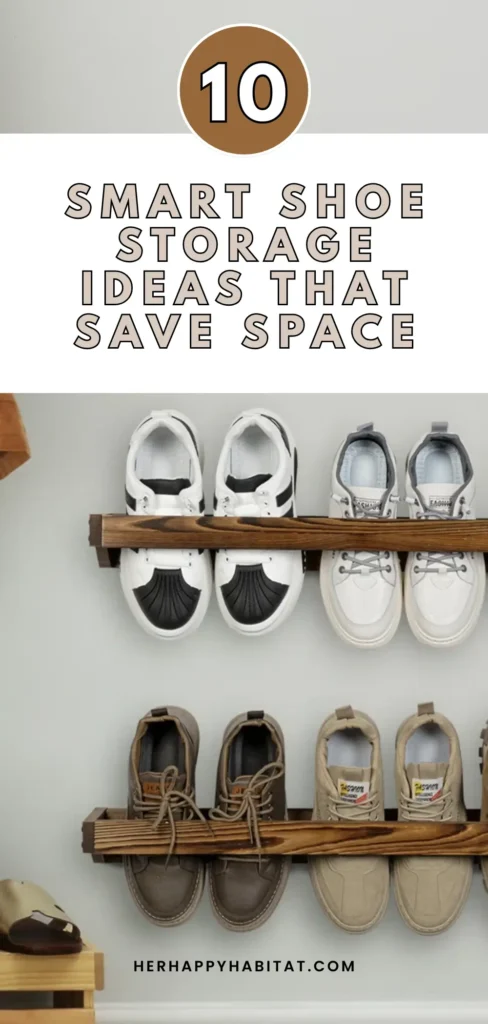
The good news is that smart shoe storage doesn’t require a custom build or a massive purge.
With a few thoughtful tweaks—some discreet, some design-forward—you can make your space work harder while keeping your footwear easy to find and genuinely pleasant to look at.
Keep reading for 10 shoe storage ideas that feel considered, space-savvy, and refreshingly doable, even if square footage is not on your side.
1. Slim Shoe Cabinets for Entryways That Can’t Spare an Inch
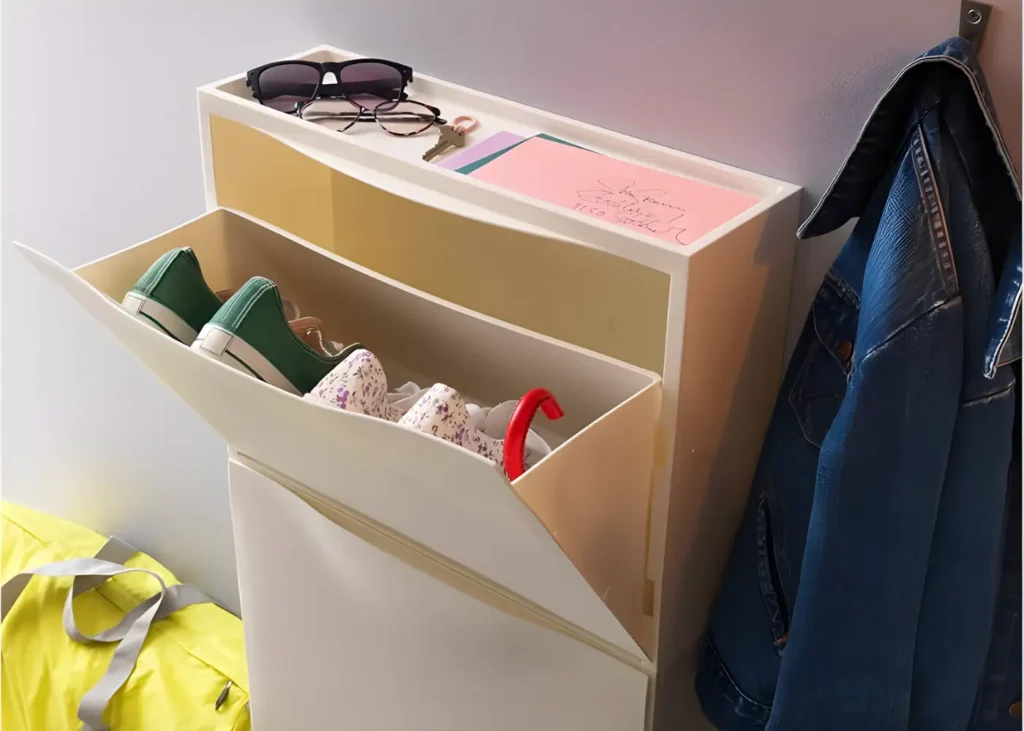
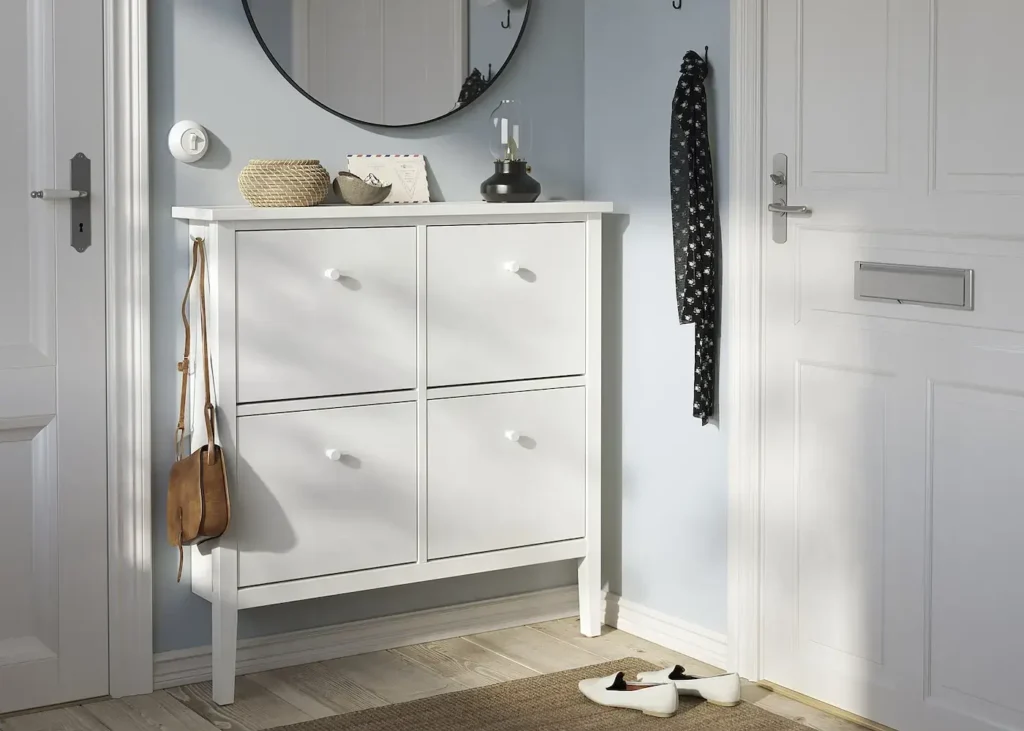
Narrow entryways don’t leave much room for error, which is why slim shoe cabinets are such a reliable solution.
Designed to sit flush against the wall, these cabinets use vertical space instead of floor space, keeping shoes hidden without making the area feel boxed in.
The flip-down compartments also help separate pairs, so shoes don’t end up stacked or misshapen over time.
They’re especially useful in apartments where the front door opens directly into the living area, since they create a cleaner visual boundary between “outside” and “home.” Mounted slightly off the floor, they can even make a small space feel taller.
Try: The TRONES cabinet from IKEA—affordable, modular, and surprisingly adaptable to different interiors.






2. Open Shelving That Treats Shoes Like Decor
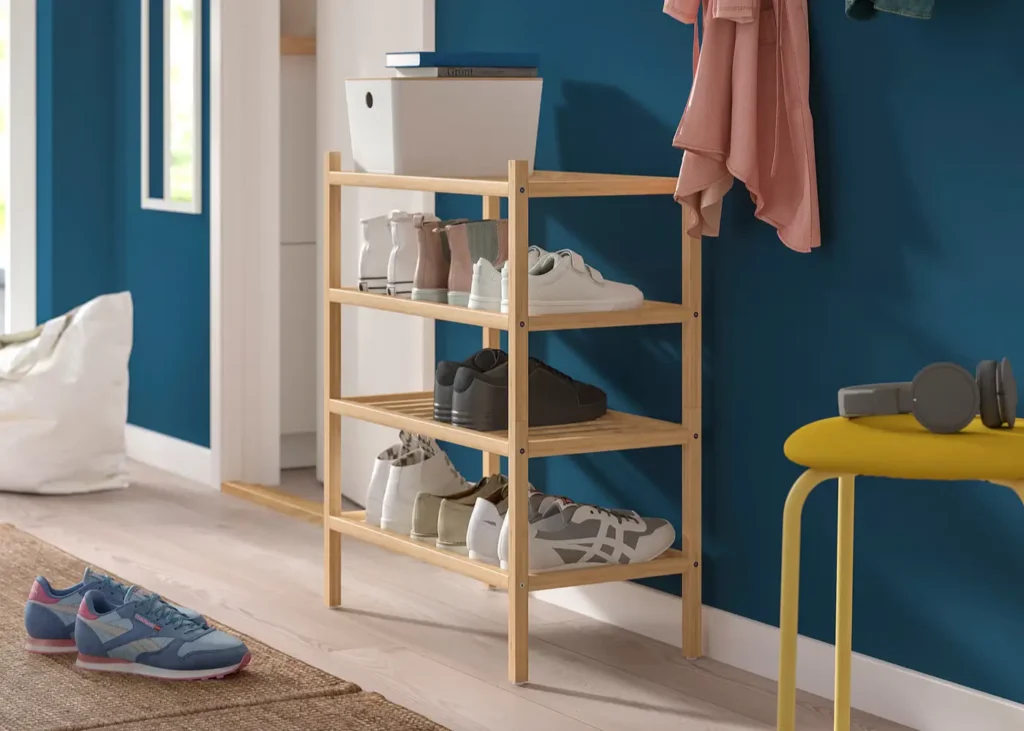
Open shelving works best when shoes are part of the aesthetic, not something you’re trying to hide.
If your collection leans neutral or design-forward, shelves allow you to see everything at a glance and make getting dressed feel more intuitive. It’s also a smart way to rotate shoes seasonally, keeping everyday pairs front and centre.
The key is restraint. Leaving a bit of space between pairs, sticking to consistent shelf heights, and avoiding overcrowding keeps the look intentional rather than messy.
In a bedroom or dressing area, open shelving can feel more like a boutique display than storage.
3. Under-the-Bed Storage That Actually Feels Organized
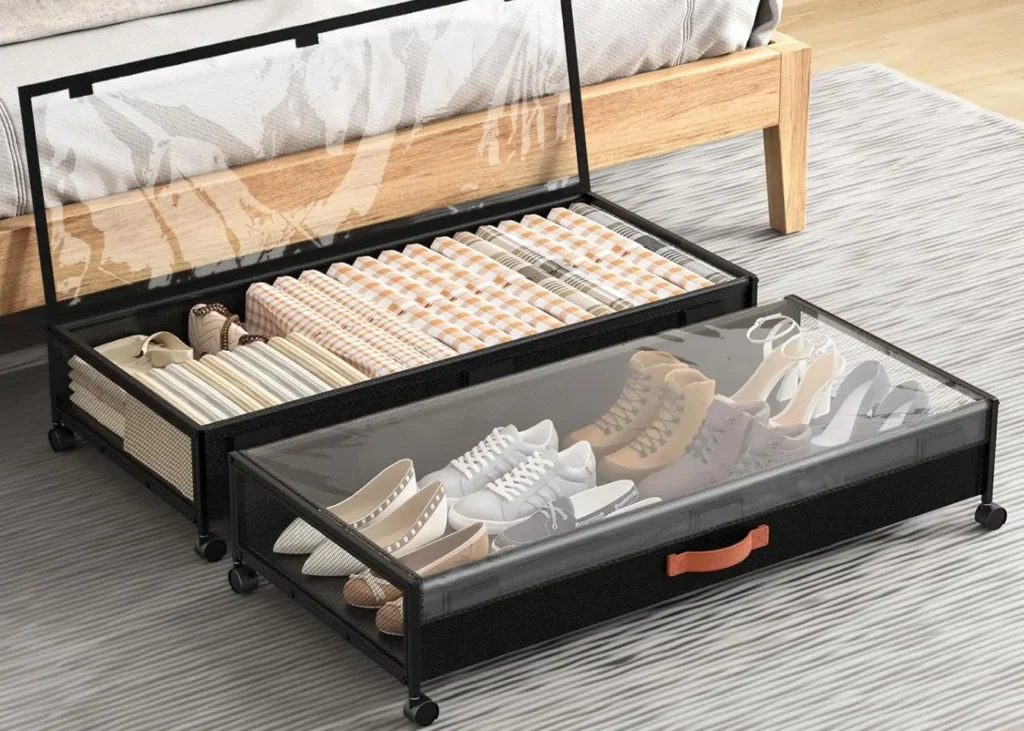
Under-the-bed storage is one of the most underused areas in the home, especially when it comes to shoes.
Low-profile bins are ideal for off-season footwear—think summer sandals in winter or bulky boots once the weather warms up. Keeping them protected from dust and light helps extend their lifespan, too.
Opt for structured containers that slide easily in and out, so accessing your shoes doesn’t feel like a chore.
Clear lids or labelled fabric boxes make it easy to see what’s inside without pulling everything out.
4. Over-the-Door Organizers That Have Grown Up
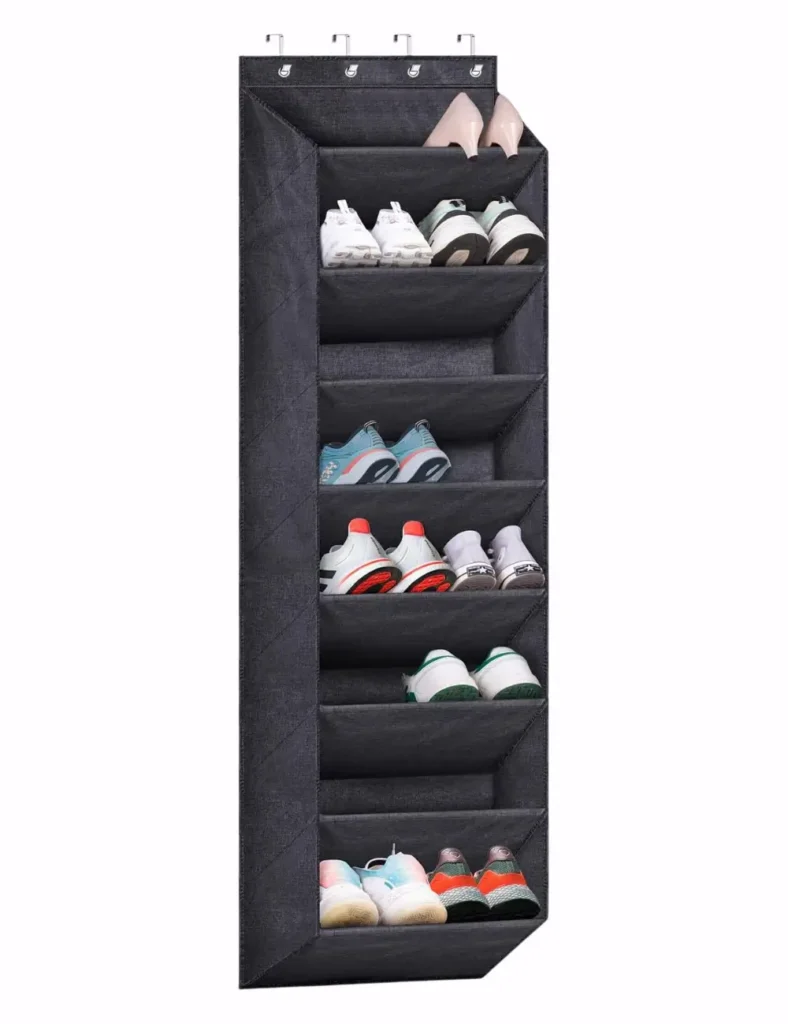
Over-the-door storage has come a long way. Today’s versions are streamlined, neutral, and surprisingly discreet, making them a solid option for renters or anyone short on storage. They’re particularly useful for lightweight shoes that don’t need heavy support.
Because they use otherwise wasted space, over-the-door organizers help free up valuable shelf or floor real estate. Placed inside a closet door, they’re completely hidden; used on a bedroom or bathroom door, they can still feel neat and intentional.
5. Storage Benches That Earn Their Place
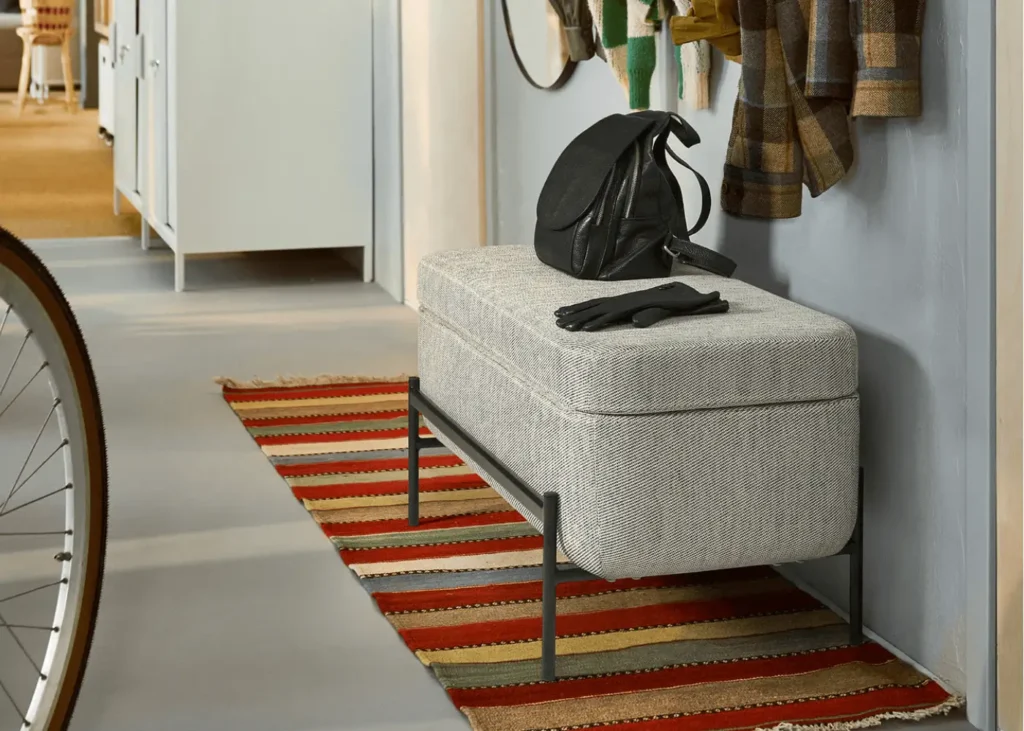
A bench with built-in shoe storage is one of those quietly brilliant pieces that make daily life run smoother—perfect for entryways and mudrooms where function really matters.
It gives you a place to sit while putting on shoes, keeps pairs neatly contained, and creates a natural drop zone that stops footwear from drifting further into the house.
Closed compartments help keep visual clutter under control, while open cubbies are ideal for shoes you reach for on repeat.
Upholstered designs soften the look and make the bench feel intentional rather than purely practical, which is especially useful when it’s one of the first things you see when you walk in the door.
6. Adjustable Closet Systems That Adapt Over Time
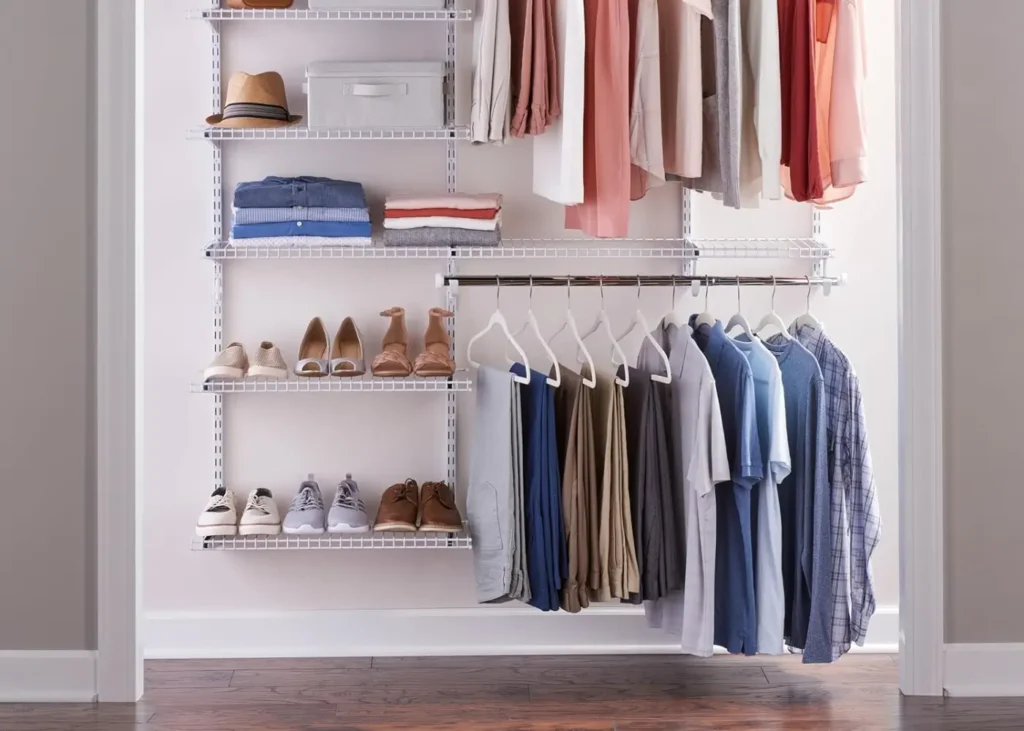
Shoes come in all shapes and heights, which is why fixed shelving often falls short.
Adjustable closet systems allow you to customize shelf spacing so boots aren’t crushed and trainers aren’t wasted on oversized gaps. As your collection changes, the layout can change with it.
Dedicating a single column or section of your closet specifically to shoes keeps everything organized and easy to scan. It also helps prevent shoes from spilling into other storage zones.
7. Rolling Shoe Drawers for Deep Closets
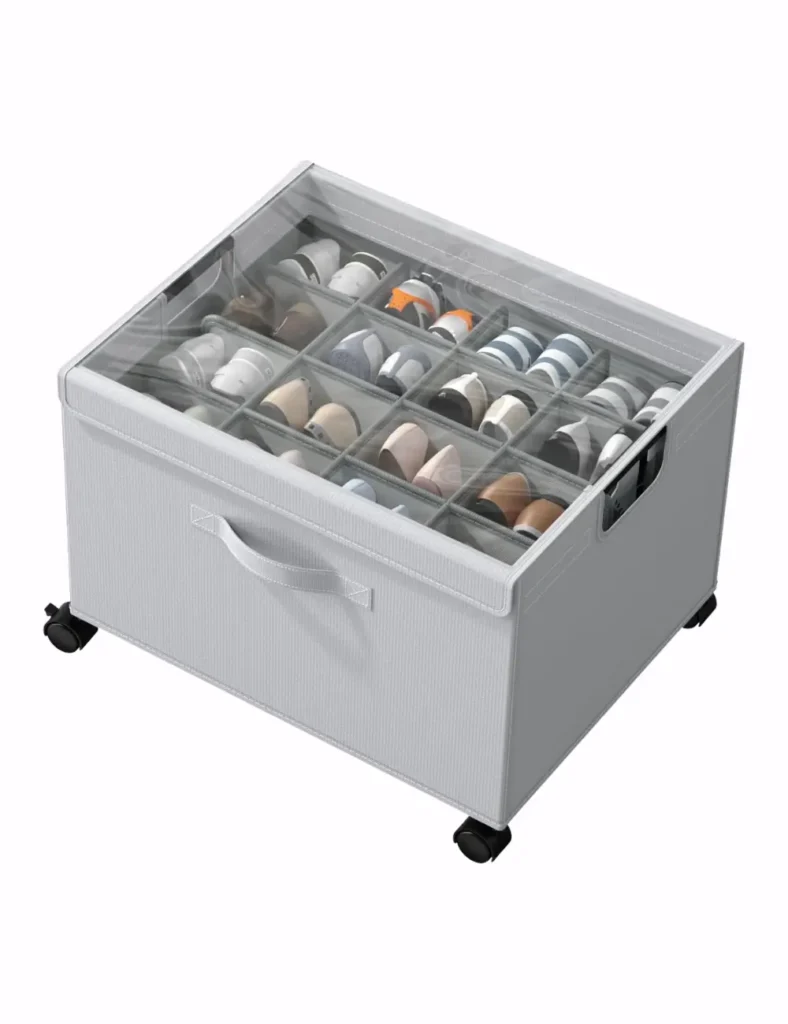
Deep closets can hide a lot—but not always in a good way. Rolling shoe drawers or pull-out trays bring everything forward, so you can see your entire collection without crouching or rummaging. This visibility makes it easier to keep things organised and reduces the chances of forgotten pairs.
They’re especially useful for stacking shoes in rows without losing access to the back. Once installed, they tend to feel like a small luxury that quickly becomes indispensable.
8. Wall-Mounted Shoe Racks That Feel Intentional
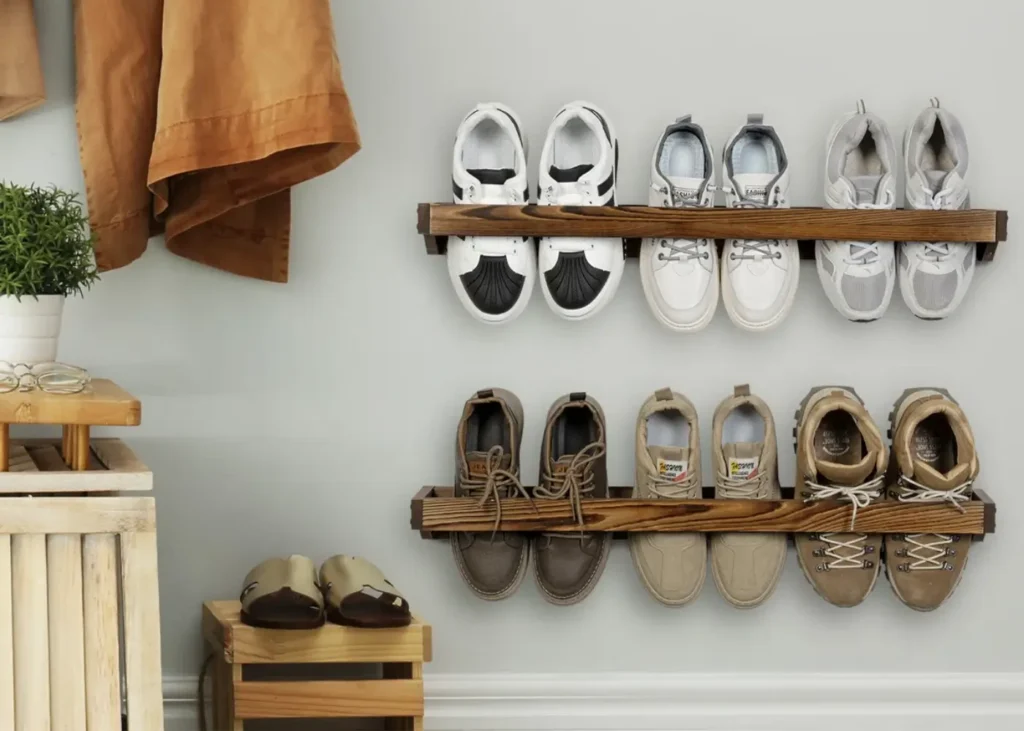
A wall-mounted shoe rack strikes that rare balance between practical and design-forward.
By lifting shoes off the floor, it instantly makes an entryway or hallway feel more considered, while keeping everyday pairs easy to grab on the way out. Unlike hooks or pegs, a slim shelf-style rack offers structure, which helps shoes look organised rather than casually tossed.
This style works especially well when finished in warm wood or muted tones, as it reads more like a floating shelf than a storage solution.
Mounted at eye level or staggered in pairs, it can even become a subtle visual feature—functional, but quietly polished.
9. Shoe Boxes That Feel Uniform, Not Industrial
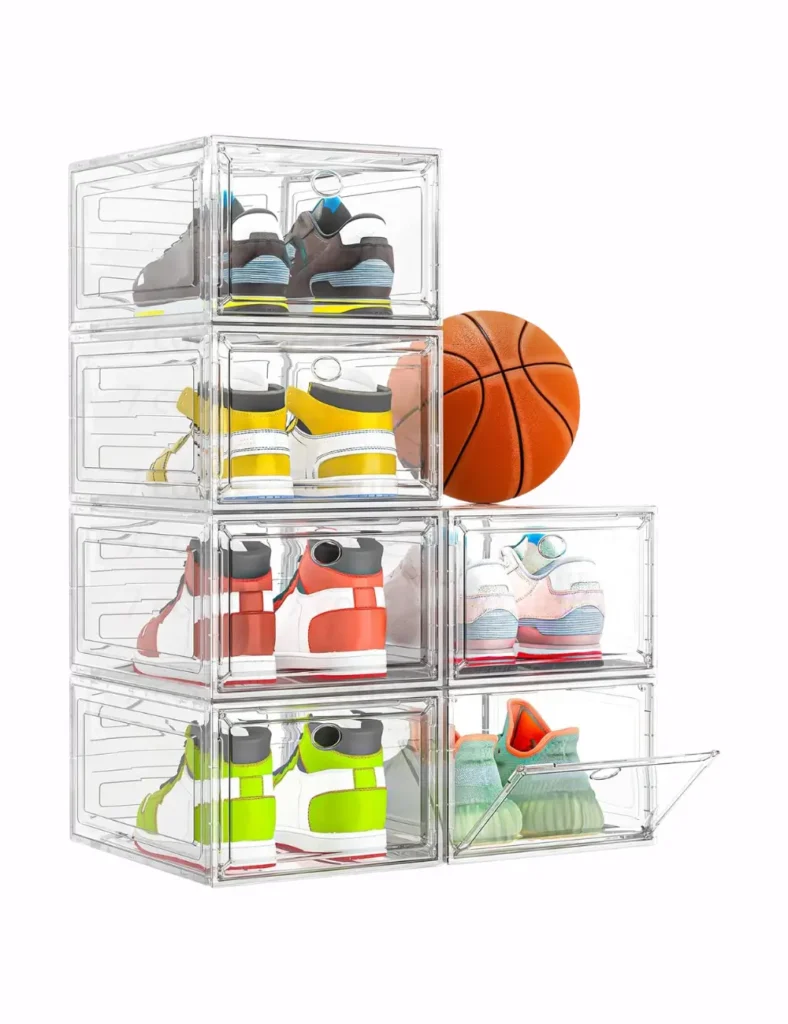
Clear shoe boxes have become popular for a reason: they protect shoes while making them easy to identify. When all boxes match, the effect is tidy and streamlined rather than utilitarian. Front-opening designs are especially practical, allowing access without unstacking.
This system works well for people who like order and visibility, and it’s surprisingly satisfying to maintain. Over time, it can also encourage more mindful purchasing.
10. Furniture with Hidden Shoe Storage
If visual calm is a priority, furniture with hidden storage is hard to beat. Ottomans, console tables, and even some bed frames offer concealed compartments that keep shoes completely out of sight.
This approach is ideal for shared spaces where you want storage without obvious function.
Hidden storage works particularly well for guest shoes or less frequently worn pairs. Everything has a place, but nothing competes for attention.
Smart shoe storage is less about strict organization and more about creating systems that suit how you actually live. When storage works with your routines—not against them—keeping things tidy feels far more natural.
SEE ALSO: