

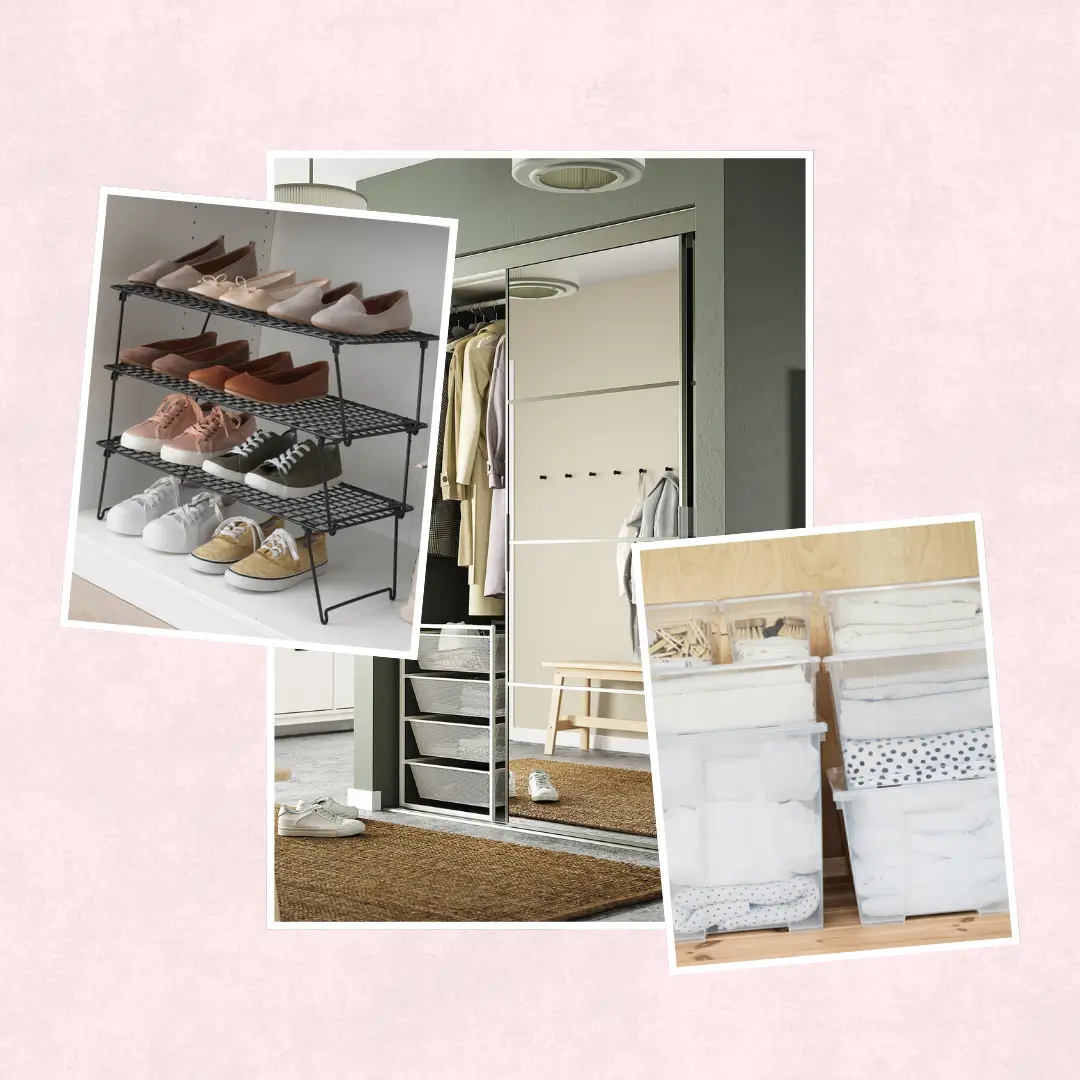
Let’s talk about the rental closet.
The one with the single sad hanging rail, the shelf that’s slightly too high to be useful, and approximately zero built-in organization beyond whatever the previous tenant left behind in the form of a broken plastic hanger and one mysterious hook.
Every rental in history appears to have been designed by someone who has never actually needed to store clothing before, and the result is a closet situation that creates low-grade daily friction before the day has even properly started.
PIN FOR LATER 📌
The good news is that a rental closet is one of the most transformable spaces in an apartment, and it requires neither a Container Store budget nor a single permanent modification to go from chaotic to genuinely impressive.
I’ve overhauled my rental closet twice in the last three years, and the second time cost me less than forty dollars and took a Sunday afternoon.
The difference between before and after was the kind of thing that makes you open the closet door just to look at it, which sounds ridiculous until you’ve experienced it firsthand.
These 10 ideas are the ones that make the biggest impact for the least investment, whether the starting point is a reach-in closet the size of a generous shoebox or a walk-in that just needs some actual organization to fulfill its potential.
1. Double Your Hanging Space With a Tension Rod
The single most impactful closet hack available and the one that costs almost nothing.
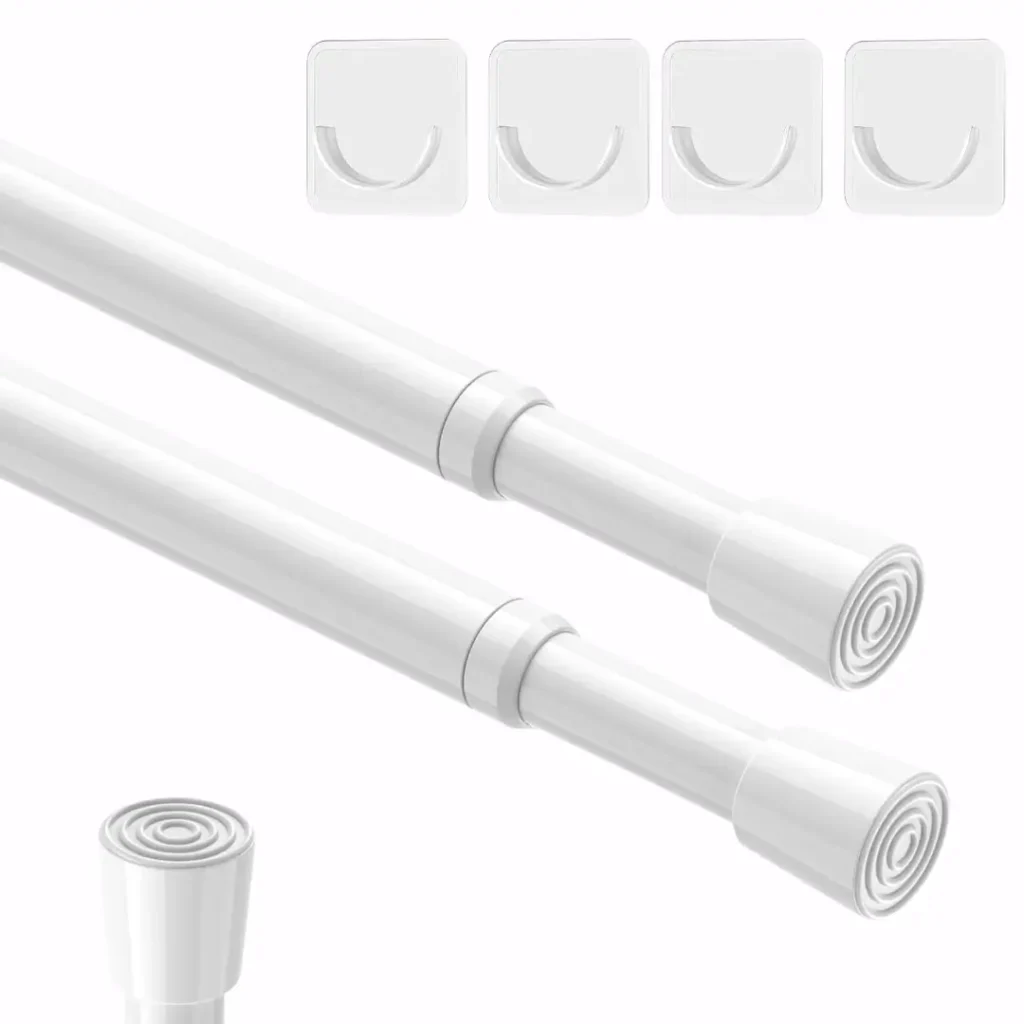
A tension rod added below the existing hanging rail creates an entire second level of hanging space for shorter items like shirts, blazers, folded trousers, and jackets.
The existing rail handles longer items like dresses and coats. The space below the tension rod handles everything else.
The tension rod requires no installation, no drilling, and no landlord permission.
It adjusts to fit any closet width, holds a genuinely impressive amount of weight when centered properly, and comes out in under ten seconds when moving day arrives.
At under ten dollars from any home goods store, it is the highest-return single purchase available for a rental closet and the one worth doing before anything else.
The organizational logic that works best with the double rail: group short hanging items by category on the lower rod.
Shirts together, blazers together, folded trousers clipped to hangers together. The visual consistency makes everything easier to find and makes the closet look considerably more intentional than a single stuffed rail ever could.
EVERYONE’S CLICKING ON:

12 Renter-Friendly Bedroom Ideas That Make the Space Actually Feel Like Yours
13 Renter-Friendly Wall Decor Ideas That Don’t Involve a Single Nail

13 Farmhouse Pantry Decor Ideas That Make Organizing Actually Enjoyable


How To Start A Hobby When You Have No Energy (A Realistic Guide)

How To Get Rid Of Fruit Flies In The Home (And Keep Them Gone)
2. Switch to Matching Slim Velvet Hangers
This one sounds almost too simple to make this list, and it makes a bigger difference than almost anything else on it.
Replacing a mismatched collection of wire dry-cleaning hangers, chunky plastic ones, and the occasional wooden survivor with a full set of matching slim velvet hangers transforms the visual quality of a closet immediately and completely.
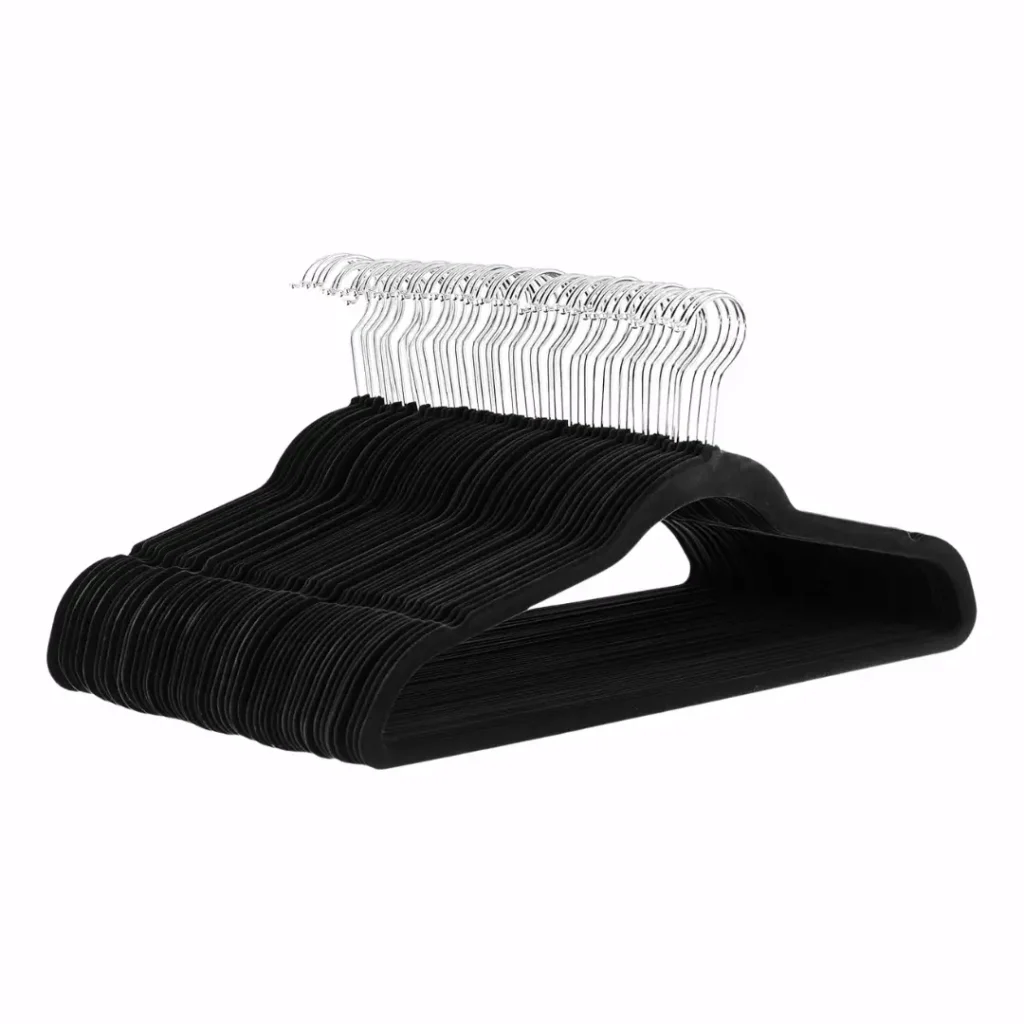
The slim profile means significantly more clothes fit on the same rail. The velvet surface means nothing slides off. The uniform appearance means the closet looks organized even before anything else has been addressed.
It’s the closest thing to an instant closet makeover available, and a set of fifty velvet hangers costs less than fifteen dollars.
Go with black or grey for the most versatile, most aesthetically pleasing result. Avoid the rose gold and pastel options that look appealing in the store and slightly chaotic in an actual closet, where the clothing colors are doing enough visual work already.
3. Add an Over-the-Door Organizer
The back of the closet door is prime real estate that most rental closets leave completely unused.
An over-the-door organizer converts it into functional storage for shoes, accessories, folded items, or whatever the closet most needs more space for. No installation, no damage, completely reversible.
The specific type of over-the-door organizer worth choosing depends on what the closet needs most. A clear pocket organizer for shoes keeps them visible and accessible without using floor space.
A hook-based organizer for bags and accessories keeps them off the floor and off the shelf.
A small over-the-door mirror with hooks below it solves both the mirror situation and the accessory storage situation simultaneously.
The one consideration worth checking before purchasing: the door clearance.
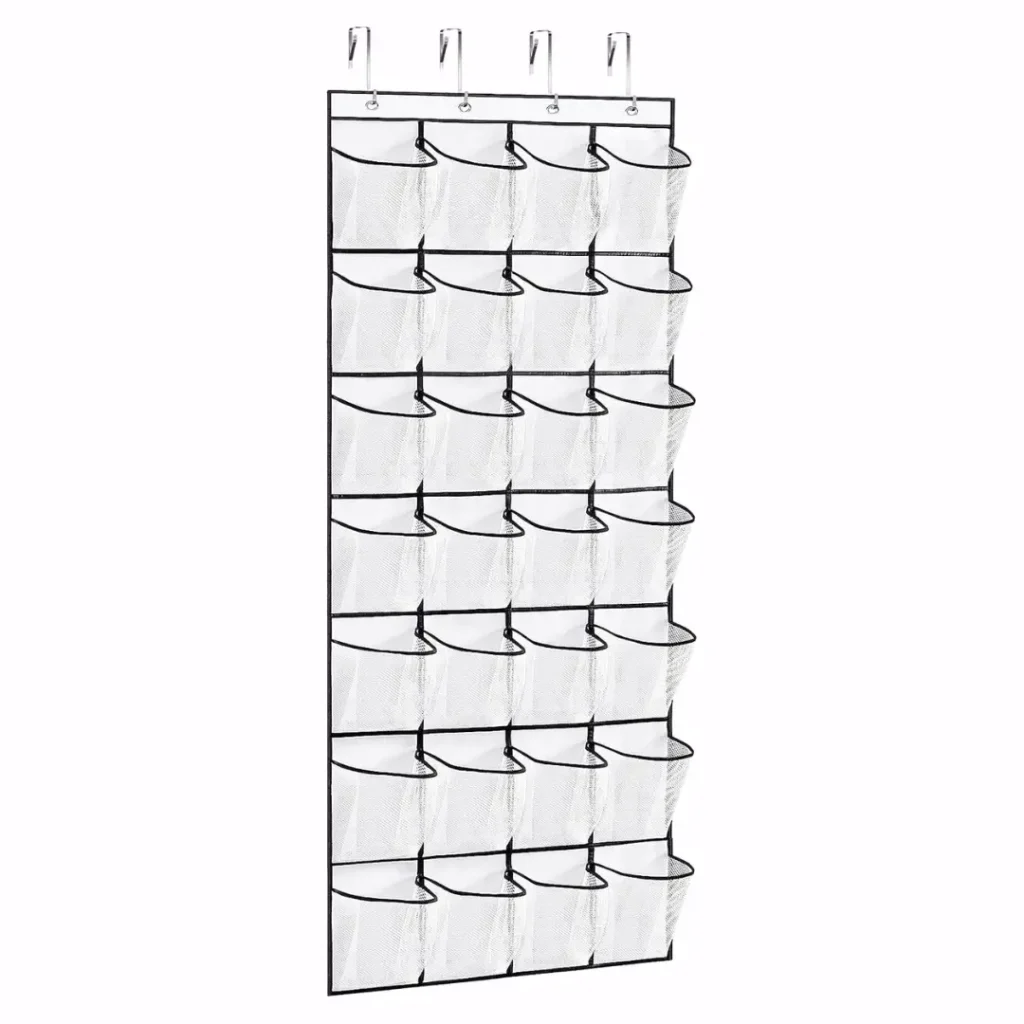
Some closet doors open into tight spaces where a thick over-the-door organizer creates enough extra depth to prevent the door from opening fully.
Measure the clearance before buying and choose a slim profile option if the space is tight.
4. Use Clear Stackable Bins on the Shelf
The shelf above the hanging rail in most rental closets is used in one of two ways:
- Completely empty because nothing is easy to retrieve from it
- Chaotic pile of things pushed to the back and forgotten about until moving day.
Clear stackable bins solve both problems simultaneously.
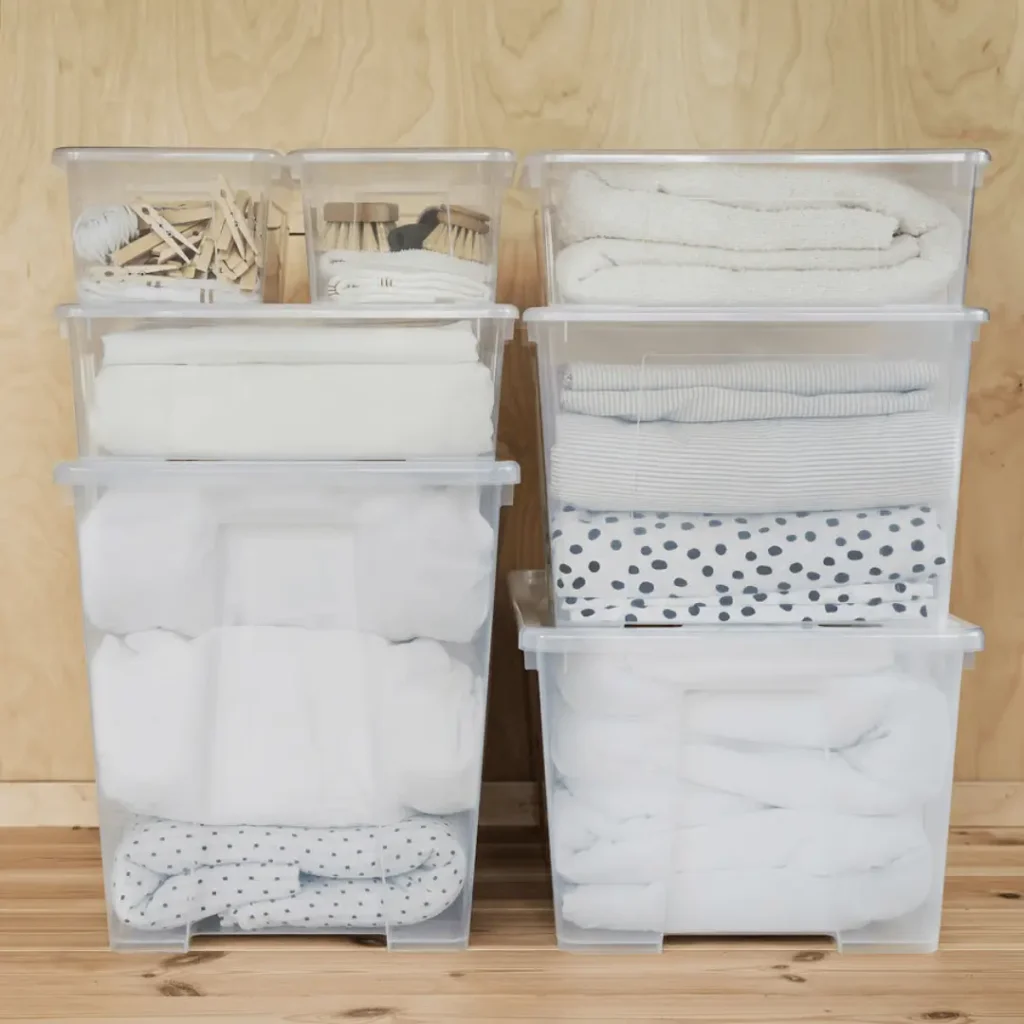
Labeled, clear-lidded bins make stored items visible without removing everything to find what’s needed. Stacking them makes use of the vertical space between the shelf and the ceiling.
Consistent sizing makes the shelf look organized rather than accumulated. And the entire system comes down and goes into the moving truck with no evidence left behind.
The Container Store’s IRL bins and IKEA’s SAMLA boxes are both consistently recommended for closet shelf organization at a price point that makes outfitting an entire shelf affordable.
Label each bin clearly on the front rather than the top so the contents are identifiable without removing anything from the stack.
5. Install a Freestanding Shoe Rack
Shoes on the closet floor are the fastest route to a closet that looks chaotic, regardless of how organized everything above them is.
A freestanding shoe rack, positioned either inside the closet or just outside it, keeps shoes organized, visible, and off the floor without requiring any wall installation.
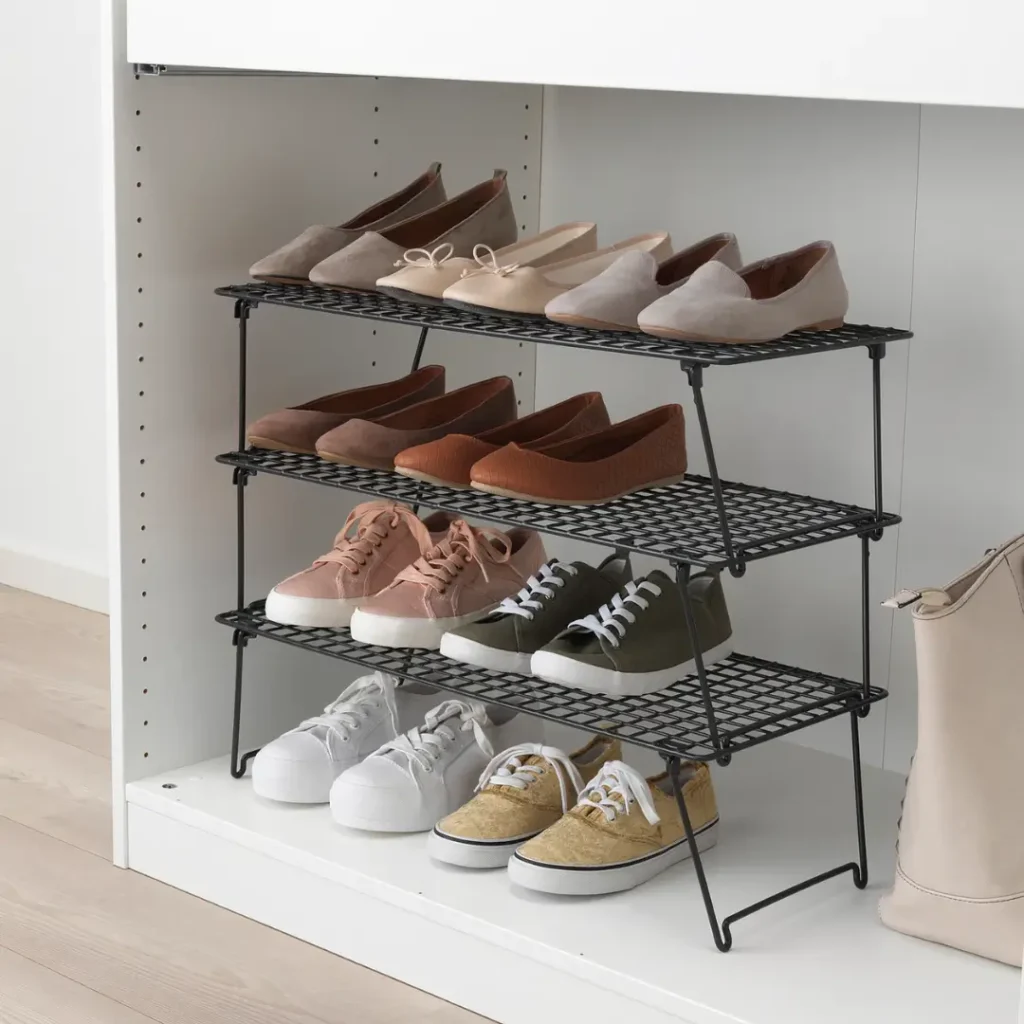
The tiered varieties that hold eight to twelve pairs in a compact footprint are the most practical for a rental closet with limited floor space.
For a more aesthetically impressive option, a slanted shoe rack in natural wood or a clear acrylic design keeps shoes visible and organized in a way that reads more like a boutique display than a functional storage solution.
For a genuinely Pinterest-worthy shoe situation, decant shoes into clear stackable boxes with a Polaroid photo of the shoe taped to the front.
It takes an afternoon, requires nothing permanent, and produces the kind of closet that people photograph when they come over, which is either aspirational or slightly unhinged depending on your perspective.
Both are valid.
For more shoe storage ideas, check out these posts:
- 10 Clever Ways To Store Shoes In A Dorm Room
- 10 Smart Shoe Storage Ideas That Save Space (and Your Sanity)
- 17 Clever DIY Shoe Storage Ideas That Actually Work In Real Homes
6. Add Drawer Dividers to Every Drawer
The internal organization of drawers is the closet detail most likely to be completely ignored and most likely to create daily friction when it isn’t addressed.
A drawer without dividers becomes a drawer where everything migrates together into a chaotic mass that requires excavation every morning. A drawer with dividers stays organized with almost no maintenance effort.
Adjustable drawer dividers fit any drawer width without modification and create defined sections for different categories of clothing.
Underwear in one section, socks in another, gym wear in a third.
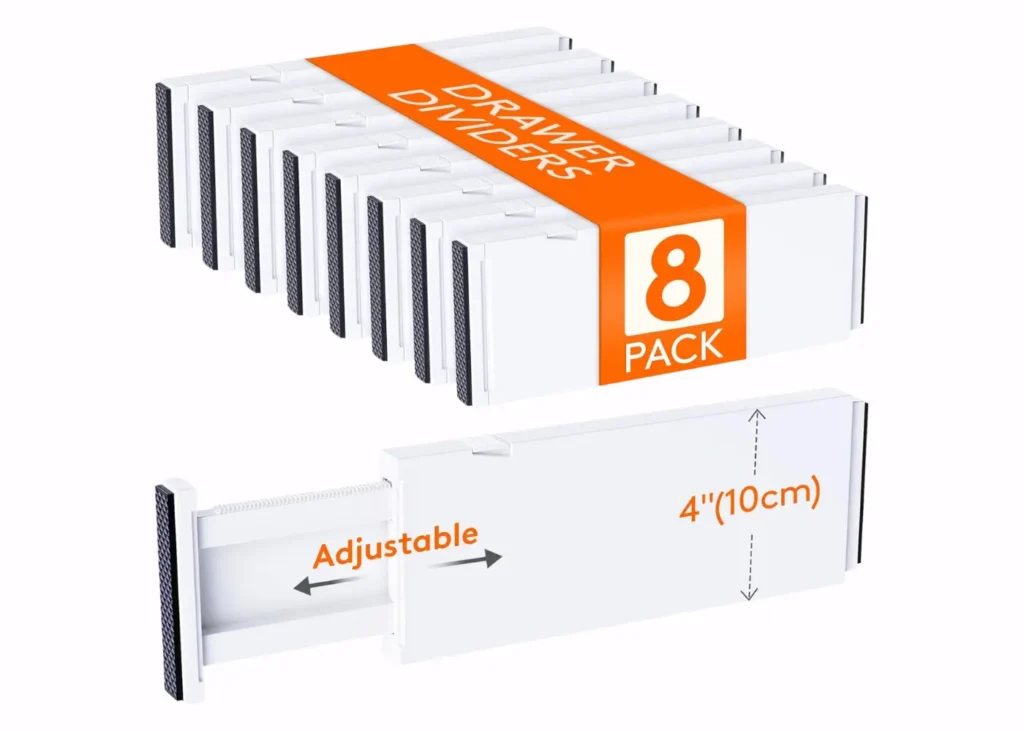
The Marie Kondo vertical folding method, where items are stored upright rather than stacked, works particularly well with divided drawers because every item is visible without disturbing the others.
For a more premium look at a budget price, velvet drawer insert trays in consistent sizing create the kind of drawer organization that looks like it was custom-built rather than purchased from Amazon for twelve dollars.
Which, to be clear, it absolutely was, and that is completely fine.
In fact, you can grab a pack of 4 very premium-looking black velvet drawer inserts for $19.99 on Amazon HERE.
7. Use the Floor Space Strategically
The floor of a rental closet is almost always underutilized beyond the chaotic shoe situation addressed above.
Used strategically, it adds significant storage capacity without requiring any wall or ceiling installation.
A small set of drawers or a low cube storage unit on the closet floor converts unused floor space into organized storage for folded items, accessories, or anything that doesn’t hang.
IKEA’s JONAXEL storage unit fits inside most reach-in closets and adds more organized storage than the closet’s existing shelving in many cases.
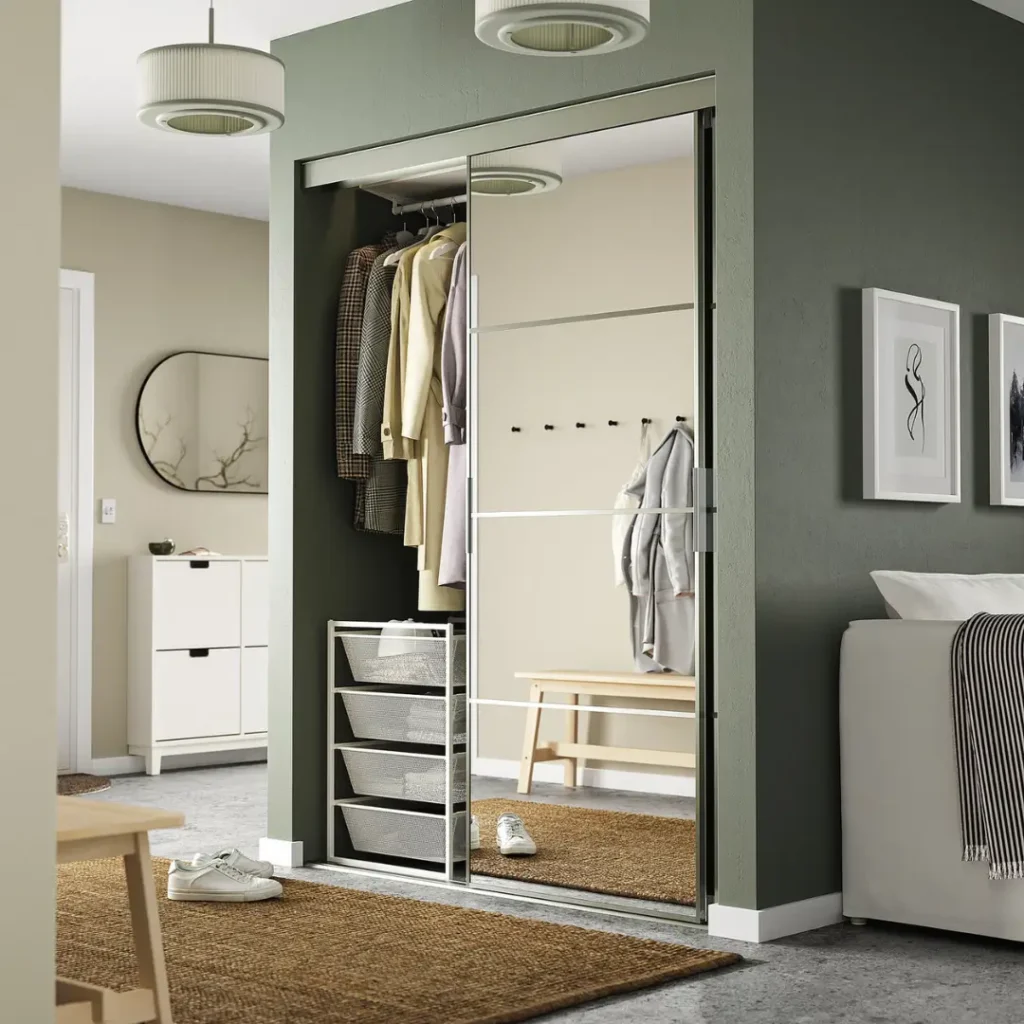
For walk-in closets specifically, a small ottoman or storage bench on the floor serves double duty as a surface for getting dressed and a storage solution for items like extra bedding, seasonal clothing, or anything that needs to live in the closet but doesn’t have an obvious home on the rail or the shelf.
8. Create a Dedicated Accessories Section
Accessories are the closet category most likely to end up in a tangled pile at the bottom of a drawer or draped over the nearest available surface, which creates both a practical problem and a visual one.
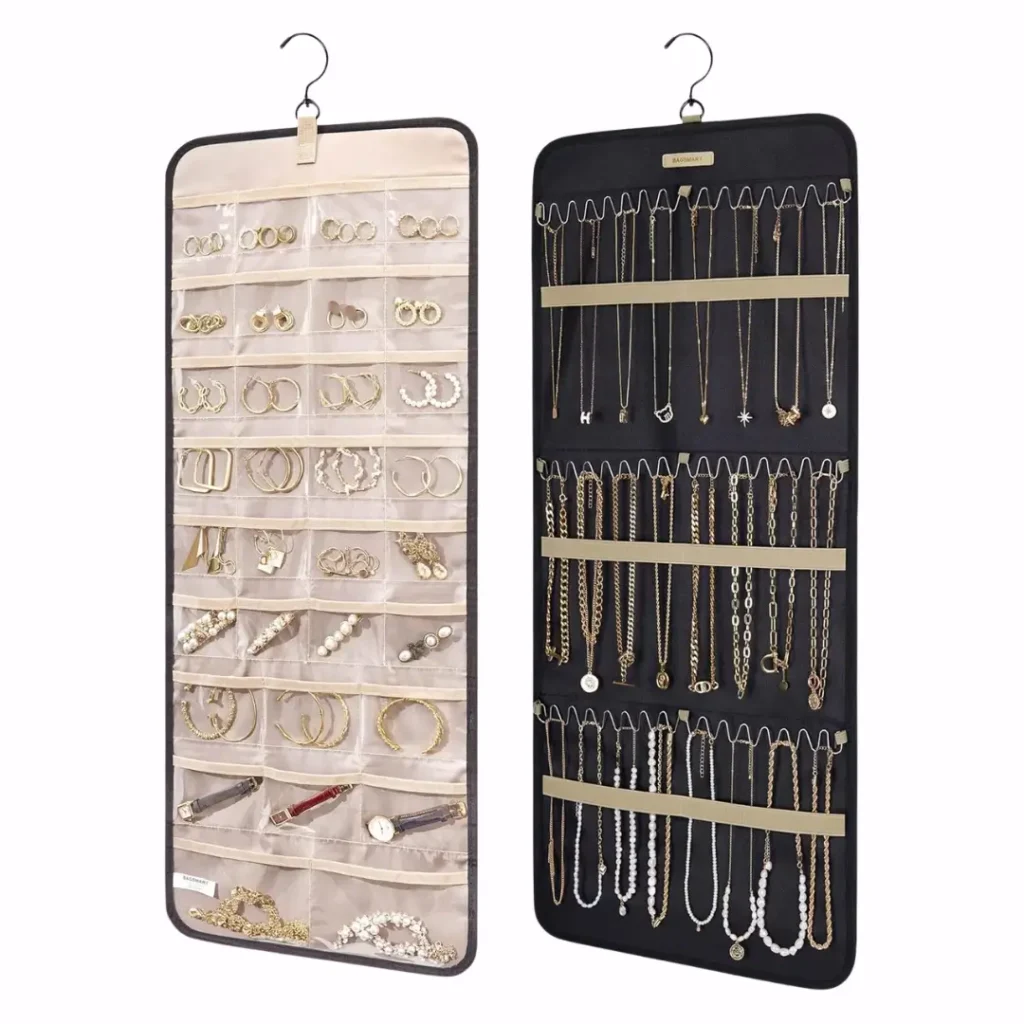
A dedicated accessories section in the closet solves both simultaneously.
A small jewelry organizer hung on the inside of the closet door or mounted on the wall with an adhesive hook keeps necklaces untangled and visible.
A hook rail mounted with command strips holds bags, belts, and scarves in an organized way that makes them easy to grab without disturbing everything else. A small acrylic organizer on the shelf keeps sunglasses visible and scratch-free.
The Pinterest-worthy accessories wall, where everything is displayed rather than hidden, is entirely achievable in a rental context using adhesive hooks, a tension rod across an alcove, and a few S-hooks.
It looks impressive, requires zero permanent installation, and makes getting dressed significantly more enjoyable when everything is visible and accessible rather than buried.
9. Add Lighting to the Closet
Rental closet lighting is almost universally inadequate.
A single overhead bulb that casts more shadow than light, or no lighting at all, in a reach-in situation where the overhead bedroom light is supposed to illuminate the closet interior from three feet away.
The result is a closet where colors are impossible to distinguish accurately, and half the contents are permanently in shadow.
Battery-operated LED strip lights or puck lights added to the closet interior require no wiring, no installation beyond an adhesive backing, and transform the visibility of everything inside.
Motion-activated options switch on when the door opens and off when it closes, which means no switch to remember and no battery drain from leaving them on.
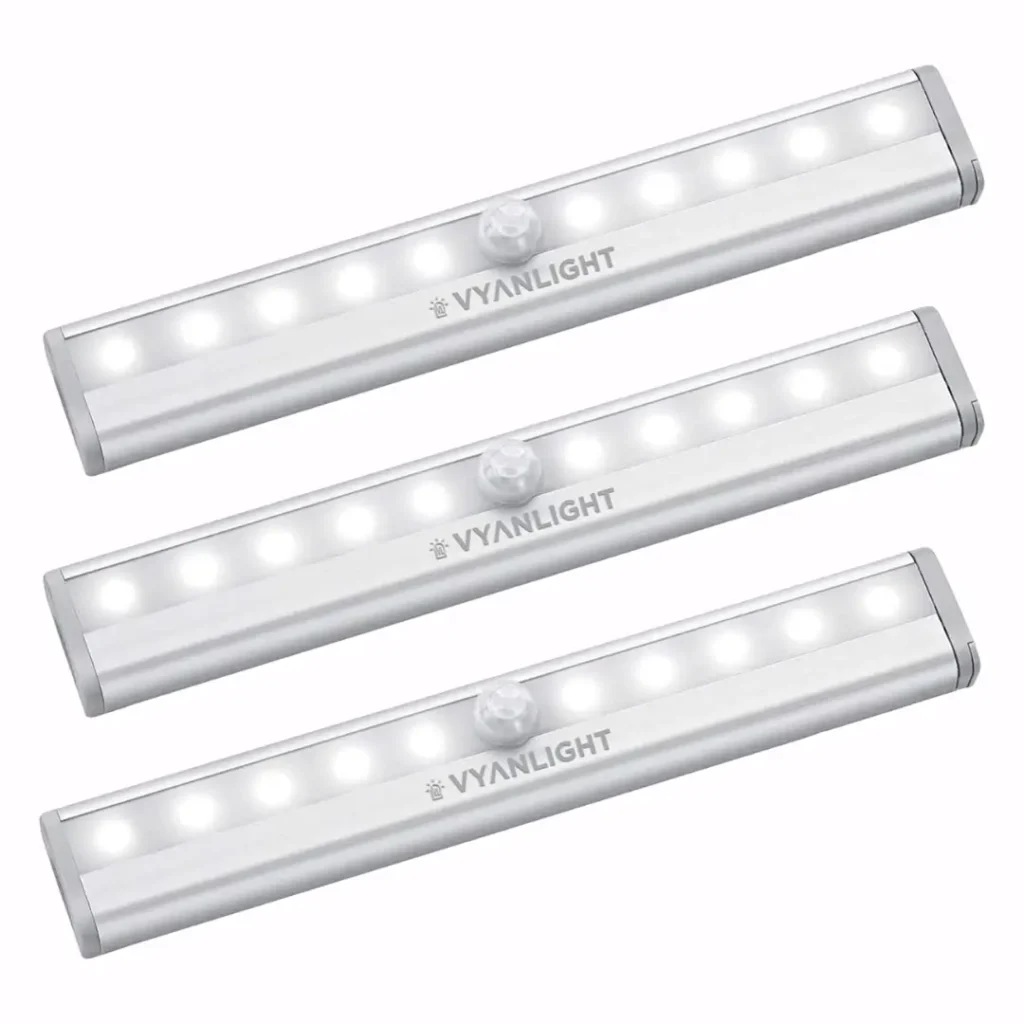
The quality of light inside the closet also affects how much more organized it looks immediately.
A well-lit closet looks more intentional than an identical closet in shadow, which means the lighting investment pays a visual dividend beyond the purely practical one.
10. Implement a Seasonal Rotation System
A rental closet trying to hold an entire year’s worth of clothing simultaneously is a closet that will always feel overstuffed, regardless of how well the individual organization systems are working.
A seasonal rotation system solves this by keeping only the current season’s clothing in the closet and storing everything else out of the way.
Vacuum storage bags are the most space-efficient solution for off-season clothing, compressing bulky items like winter coats, sweaters, and heavy bedding to a fraction of their normal volume.
Stored under the bed, on the top shelf of the closet, or in a storage ottoman, they keep off-season items accessible without using prime closet real estate.
The rotation itself takes a couple of hours twice a year and pays daily dividends in a closet that contains only what’s currently relevant.
It’s the organizational habit that makes every other system on this list work better, because a well-organized closet with too much in it still feels chaotic. The right amount of stuff, organized well, is the actual brief.
A Few Final Notes
Label everything. A labeled system maintains itself significantly better than an unlabeled one because the correct home for everything is always obvious.
A label maker is a twenty-dollar investment that pays back in maintained organization indefinitely.
SHOP HANDHELD LABEL MAKER FROM AMAZON
Edit the clothing before organizing it. The most common closet organization mistake is organizing everything that currently exists rather than first removing what doesn’t need to be there.
A thorough edit before implementing any of these systems means the systems are working with a realistic wardrobe rather than trying to accommodate everything that’s accumulated over the last several years.
And remember that the goal isn’t a perfect closet.
It’s a closet that makes getting dressed easier and more enjoyable, that doesn’t create daily friction, and that looks good enough that opening it in the morning feels like a neutral or positive experience rather than a small defeat.
That’s an entirely achievable bar in a rental context. These 10 ideas get you there.😍