
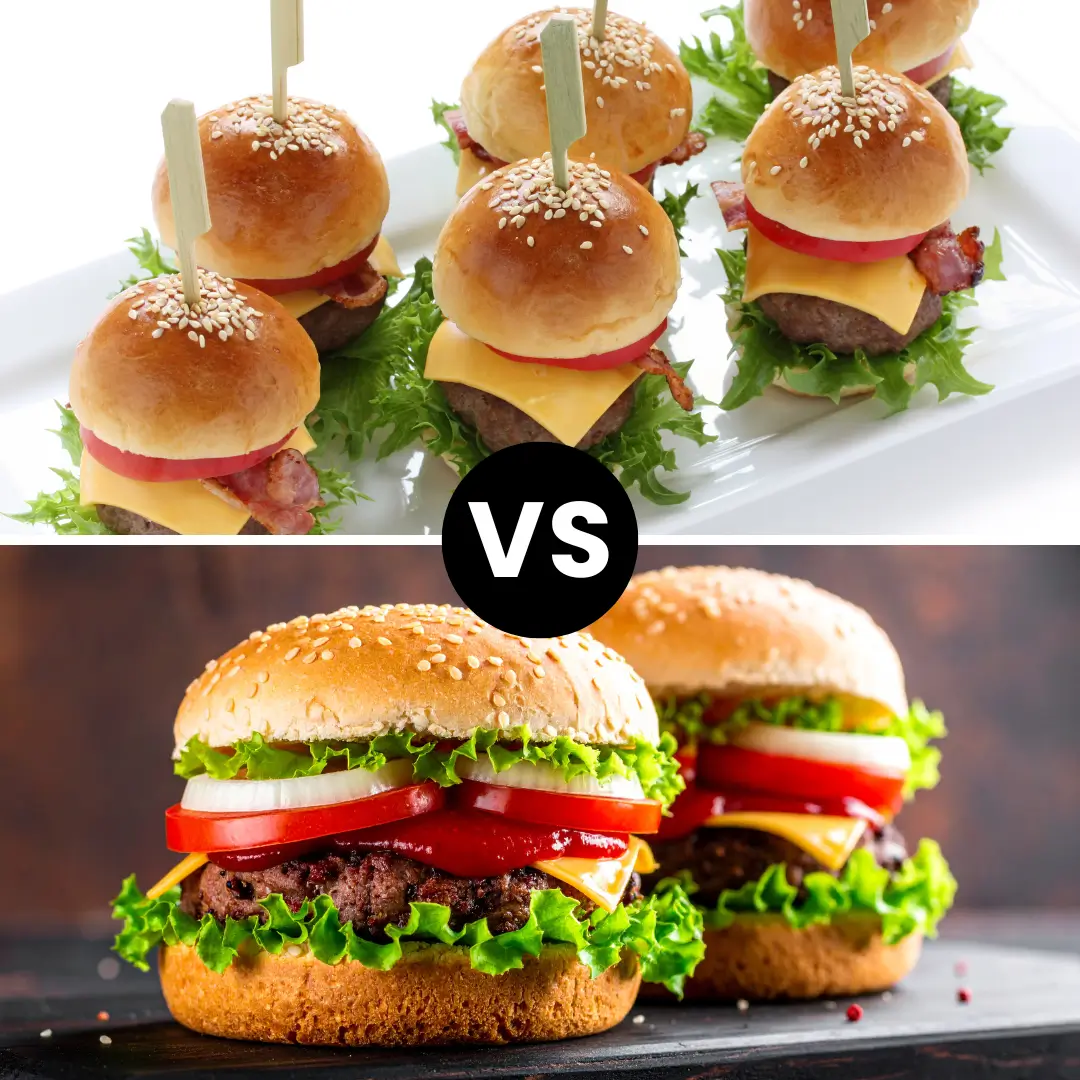
There is a moment at every backyard cookout, every game day spread, and every brunch table where someone has to make the call: sliders or burgers?
And while it sounds like a simple question, it opens up a surprisingly passionate debate.
Full-size burger people will tell you there is no substitute for a proper patty, stacked high with toppings, requiring two hands and a stack of napkins.
Slider people will tell you that good things come in small packages and that being able to try three different flavors in one sitting is an objectively superior way to eat.
Both sides have a point. So here’s a proper look at the case for each, and you can decide where you land.
The Case for Sliders
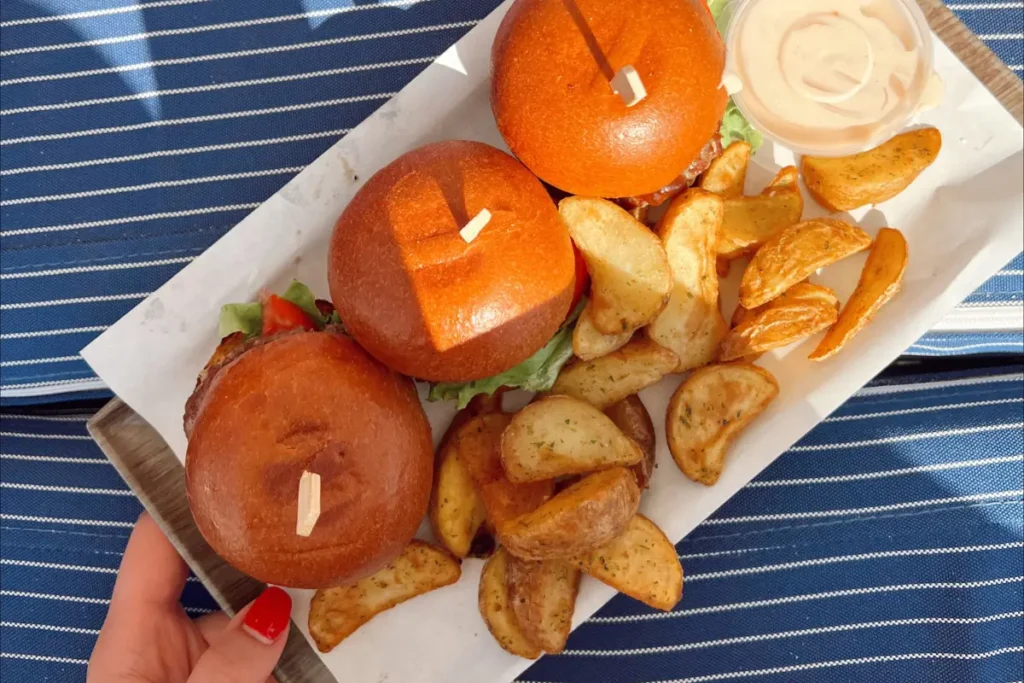
Variety is the whole point. The single biggest argument for sliders is that you are not locked into one choice. When you make a batch of sliders, you can do chicken on one end, pulled pork in the middle, and something with a little heat on the other end. Nobody has to commit. Everyone gets to try a bit of everything, which is more or less the ideal social eating experience.
They are built for crowds. A tray of sliders feeds a group in a way that individual burgers simply cannot match. There is no waiting around for your turn at the grill, no juggling a plate with both hands, and no awkward moment where half the group has finished eating before the other half has even been served. Sliders come out together, they stay warm together, and everyone eats at the same time.
Make-ahead friendly. Most slider recipes are designed to be assembled and baked, which means you can have everything ready before your guests arrive. You are not standing at a hot grill while everyone else is having a good time. This is not a small thing.
Portion control (sort of). In theory, sliders let you eat exactly as much as you want without committing to a full burger. In practice, the fact that they are small makes it very easy to eat five of them without fully registering what has happened. Whether this counts as an advantage is really a matter of perspective.
The bun-to-filling ratio is different. Slider buns, especially brioche slider buns, are soft, slightly sweet, and genuinely good. The higher ratio of bun to filling in a slider means you get more of that pillowy bread in every bite, which is either a selling point or a dealbreaker depending on how you feel about bread. For a lot of people, it is a selling point.
EVERYONE’S CLICKING ON:


The Case for Full-Size Burgers
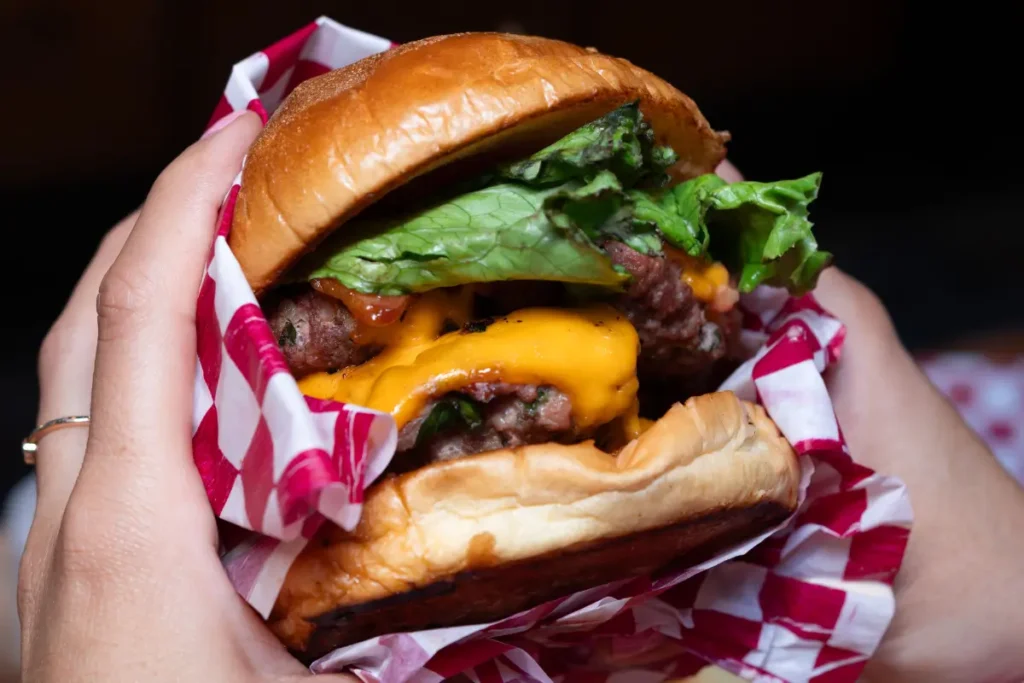
There is no substitute for a proper patty. A full-size burger gives you room to work with. You can get a thick, juicy patty with a proper sear, a real crust on the outside, and a center that stays pink if you want it to. Slider patties, by their very nature, are thin. They cook fast, and they cook through, which means you are trading that medium-rare center for convenience. For serious burger people, that trade is not worth making.
The toppings situation. When you have a full-size burger, you have surface area to work with. You can stack a proper slice of tomato, a full leaf of lettuce, a generous amount of sauce, and actual rings of onion without everything falling out with the first bite. Sliders are inherently limited in how much topping you can pile on before the whole thing becomes structurally unstable.
The eating experience. There is something satisfying about sitting down with a proper burger. It requires your full attention. It takes both hands. It is a meal, not a snack, and sometimes that is exactly what you want. A slider is easy to eat standing up at a party. A full-size burger demands that you sit down and commit to it, which has its own kind of appeal.
Customization at the individual level. When everyone builds their own burger, you get exactly what you want on it. With sliders that are pre-assembled and baked in a tray, you get what you get. If someone at the table hates onions or cannot eat cheese, a build-your-own burger situation is much easier to manage.
The char matters more. A full-size burger gives you more real estate for the Maillard reaction — that golden-brown crust that develops when meat hits high heat. More surface area means more of that deep, slightly smoky exterior that makes a burger taste like a burger. A thin slider patty gets hot and cooked through before it has time to develop the same depth.
Where They Overlap
Both are at their best when the bun is good. A bad bun ruins a slider and a burger equally, and a great bun elevates both. Brioche is the answer in most cases, whether you are making a slider or a full-size burger.
Both reward quality ingredients. The small size of a slider does not hide a bad patty, and a big burger does not automatically taste good just because it is large. What you put in matters at every size.
Both are deeply customizable. The format changes but the creative potential does not. A slider can be just as inventive and carefully constructed as a full-size burger—it just requires a slightly lighter touch with the layering.
So, Which Is Actually Better?
The honest answer is that it depends entirely on the situation.
If you are feeding a crowd and you want flexibility, variety, and ease of serving—sliders win. If you are sitting down to a proper meal and you want the full, committed burger experience with a real patty and a proper stack of toppings, the full-size burger wins.
The people who will always choose sliders are the ones who want options. The people who will always choose full-size burgers are the ones who know exactly what they want and do not want to compromise. Neither of those is wrong.
The only genuinely bad answer is a slider made with a poor-quality patty on a store-bought roll or a full-size burger so overstacked that it falls apart before you can take a second bite. Get the basics right at either size and you really cannot go wrong.