

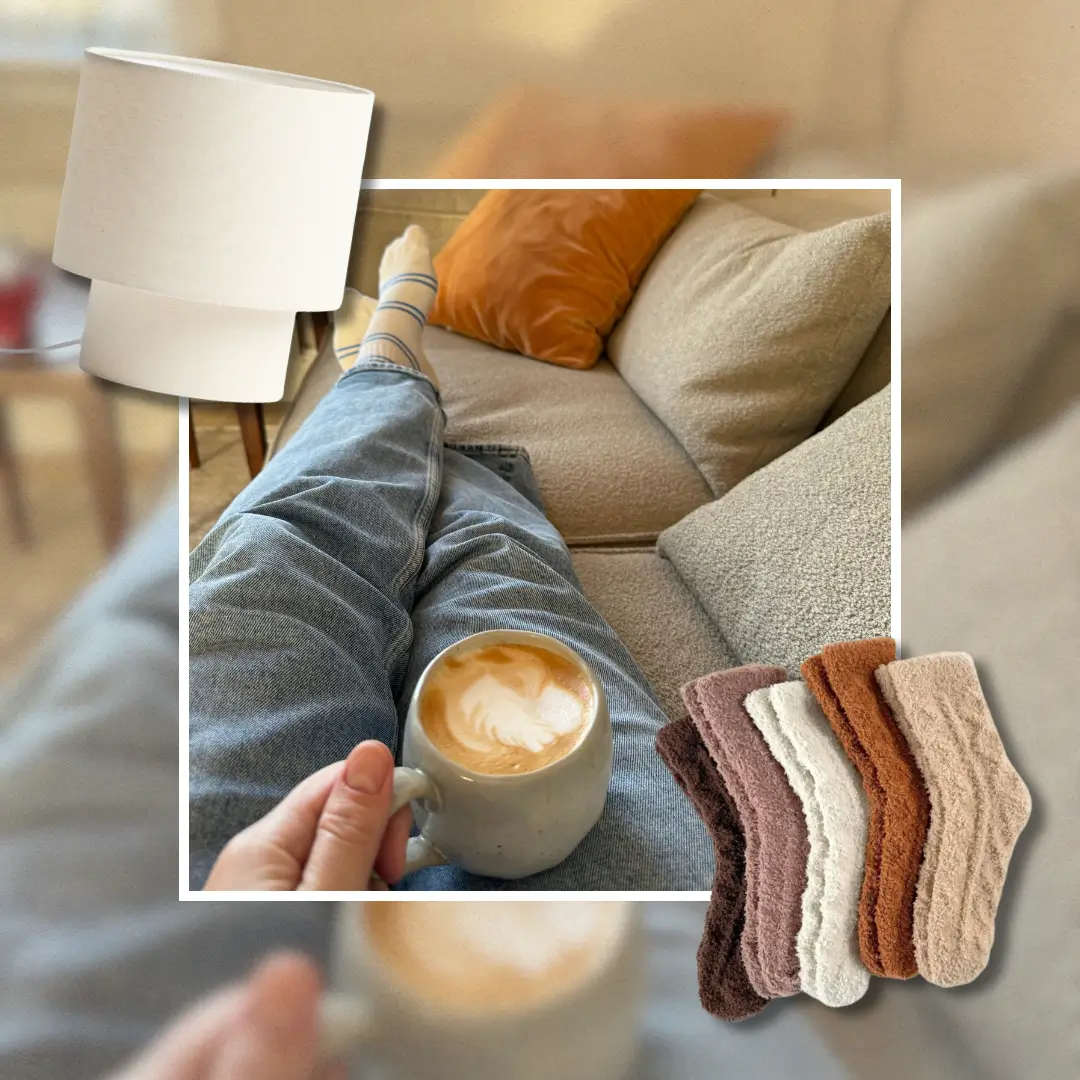
Candles lit. Fuzzy socks on. Phone in another room and a cup of something warm in your hands… congratulations, you’re basically hygge-ing.
Hygge (roughly “HOO-gah,” and no one will judge you for getting it wrong) is the Danish concept of coziness, contentment, and enjoying simple things with the people you love.
It’s the reason a dark, freezing January can still feel kind of wonderful.
It started as a Danish cultural thing, went global as a “lifestyle trend,” and somehow became shorthand for every Nancy Meyers kitchen, chunky knit, and candlelit dinner on your Pinterest board. (Fair, honestly.)
But here’s what often gets lost: hygge is a feeling first and an aesthetic second. You can’t buy it in a basket, although a really good blanket doesn’t hurt.
Below, I’m breaking down what hygge means, how to pronounce it, how it shows up in your home, and how to bring more of it into everyday life, even if you’ve never owned a single candle.
And if you’re ready to start, our cozy hygge living room ideas and hygge morning routine ideas are your next stops.
What Is Hygge? (Meaning and Definition)
Hygge is a Danish word for a feeling of coziness, comfort, and contentment, usually shared with other people.
If you’re looking for a quick definition, think “a warm, relaxed atmosphere where you feel safe, present, and happy.”
It’s not tied to a single object or style. A hygge evening might be soup and a board game with friends, or a rainy afternoon with a book or a quiet cup of tea by a window.
The common thread is slowing down and enjoying the small, simple things.
In English, people use it as a noun (“let’s have some hygge”), an adjective (“that café is so hygge”) and even a verb (“we’re going to hygge this weekend”).




How Do You Pronounce Hygge?
The usual English version is “HOO-gah,” or sometimes “HYOO-gah.” The Danish pronunciation is a little softer and harder to spell out, but the first version gets you understood.
Where Does Hygge Come From?
Hygge is a Danish concept, and the word is often traced back to an old Norse root related to comfort.
Norwegians use it too, and Sweden has its own cozy cousin in mys (plus the coffee-and-pastry ritual of fika).
It went global in the mid-2010s, helped along by Meik Wiking, CEO of the Happiness Research Institute in Copenhagen, and his book The Little Book of Hygge.
Since then, it has turned into a worldwide shorthand for cozy living.
What Is Hygge Style?
Hygge style is the look that goes with the feeling: warm, soft, and lived in. A few signature elements:
- Warm lighting. Candles, lamps, and string lights instead of harsh overhead bulbs.
- Natural materials. Wood, wool, sheepskin, and linen.
- Layered textures. Chunky knit throws, cushions, and rugs.
- A calm, earthy palette. Creams, soft grays, browns, and muted greens.
- Personal touches. Books, plants, and photos, with a lived-in feel rather than showroom perfection.
For room-by-room inspiration, check out our cozy hygge living room ideas and cozy Christmas decor ideas. And if candles are your thing, our best hygge candles are a good place to start.
What Is a Hygge Lifestyle?
A hygge lifestyle is about creating more of those warm, unhurried moments in your daily life. It’s less “buy this” and more “do this on purpose”:
- Light a candle at dinner (even on a Tuesday)
- Put your phone in another room for the evening
- Cook a slow meal instead of rushing one
- Invite a friend over for tea or a board game
- Take a walk, then come home to something warm
You can start small. Our hygge morning routine ideas, cozy indoor hobbies for winter and rainy day activities are easy ways to bring it into your week.
Hygge Is Deliberate
Here’s the part most “cozy aesthetic” posts skip: hygge is something you plan. Danes don’t wait for a cozy evening to happen.
They set the scene by lighting candles, putting on a playlist, making hot chocolate, and putting away work and devices.
That’s good news if you’re not naturally a “cozy person.” You don’t need a fireplace or a cabin in the woods. You just need to decide to make the time and create the atmosphere.
Hygge and Happiness
Denmark regularly ranks among the happiest countries in the world’s annual happiness reports, and hygge is often mentioned as part of the picture.
Wiking’s work connects it to feelings of togetherness, comfort, and living in the present.
To be fair, no one is claiming candles alone make a country happy, and hygge isn’t a replacement for professional support if you’re struggling.
But making time for warmth, people, and simple pleasures is a gentle, low-effort way to feel a little better in the dark months.
How to Hygge: 8 Easy Ways to Start
- Dim the lights. Swap the overhead light for a lamp or candles.
- Add a warm layer. A blanket, wool socks, or your favorite sweater.
- Make something warm. Tea, cocoa, soup, or something baking in the oven.
- Unplug. Phone away, notifications off.
- Read something. A paperback, a magazine, or a slow living book from our slow living books list.
- Invite someone over. Hygge is better shared, but it works solo too.
- Go outside first. A brisk walk makes coming home feel even cozier.
- Keep it simple. If you’re stressing about getting hygge “right,” that’s the opposite of hygge.
Featured Hygge Essentials
You don’t need to buy anything, but if you want to set the scene, these are the usual suspects:
- Candles or flameless LED candles
- A chunky knit throw
- Wool or fuzzy socks
- A favorite mug
- A good book
- A game or puzzle
- A small lamp with a warm bulb
Hygge vs. Cozy
They overlap, but they’re not identical. Cozy is a feeling, and hygge is a feeling plus an intention, with a strong dose of togetherness and being present.
You can be cozy alone under a blanket, but hygge adds the “and I’m enjoying this on purpose” part.
Hygge vs. Slow Living
Hygge and slow living are close relatives. Slow living is the bigger philosophy of doing less, more intentionally, and hygge is one cozy way to practice it. If you’ve seen the cozymaxxing trend, hygge is its calmer, older cousin.
Final Thoughts
Hygge is a simple idea with a funny spelling: make time for warmth, comfort, and the people (or pastimes) you love.
You don’t have to redecorate your house or buy a single candle. Start with one small thing tonight, like a lamp, a warm drink, and no phone, and see how it feels.
FAQ
Hygge is a Danish word for coziness, comfort, and contentment, often shared with others. It’s about creating a warm, relaxed atmosphere and enjoying simple things.
In English, it’s usually pronounced “HOO-gah.” The Danish pronunciation is slightly softer, but that version works fine.
Hygge is a Danish concept, and the word is also used in Norwegian. Swedes have a similar idea in mys.
Hygge style is a warm, cozy look with soft lighting, natural materials, layered textures, and personal touches like books and plants.
It’s a way of living that makes room for comfort, slow moments, and togetherness, like candlelit dinners, phone-free evenings, and time with people you care about.
Not quite. Cozy is a feeling, while hygge also includes intention, presence, and often togetherness.