

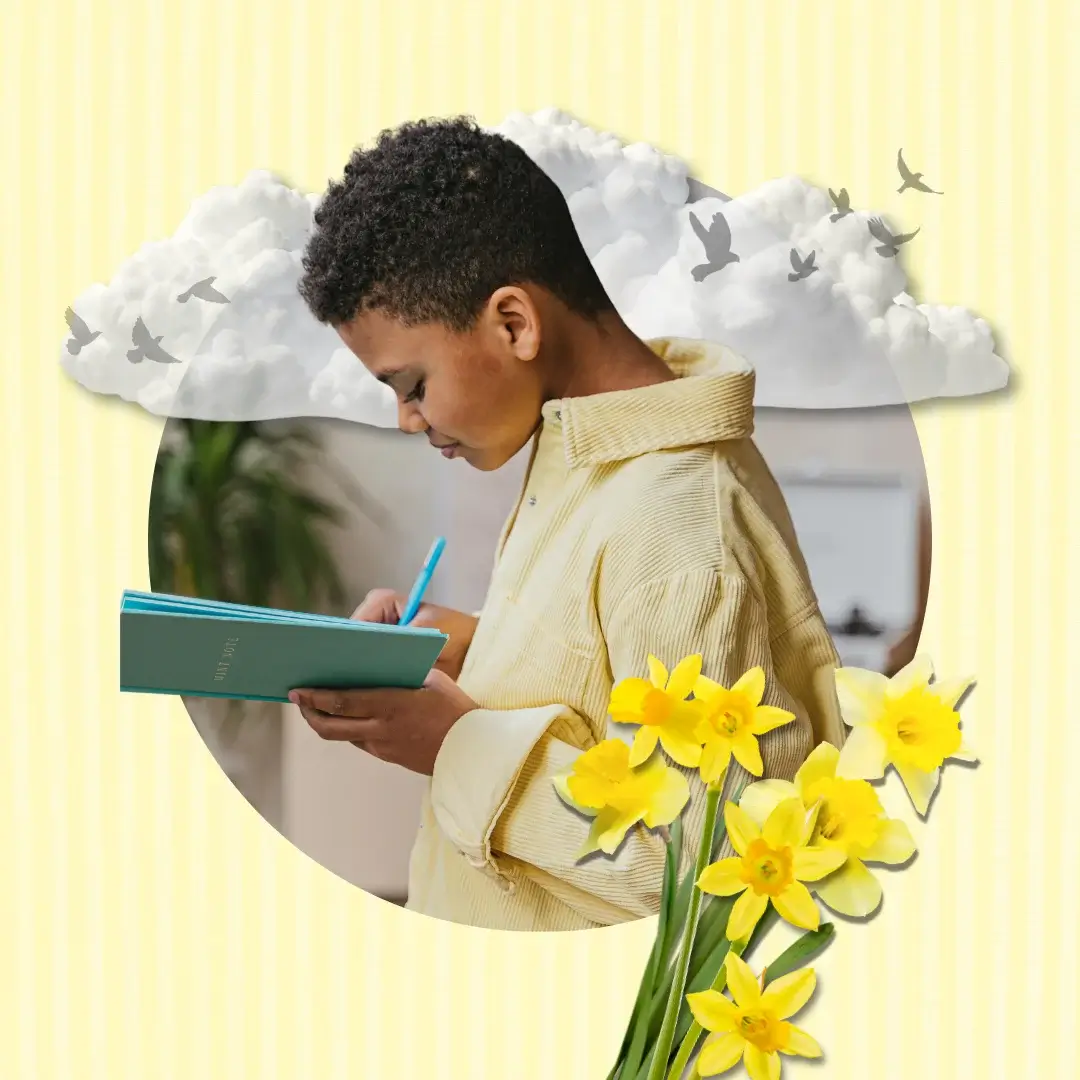
Here’s a truth that every parent, teacher, and babysitter who has ever handed a child a blank notebook knows intimately: telling a kid to “just write about something” is approximately as effective as telling them to “just tidy their room.”
The blank page needs a jumping-off point, and the jumping-off point needs to be genuinely interesting rather than the journaling equivalent of eating your vegetables.
Spring is genuinely the best season to get kids excited about writing.
PIN FOR LATER 📌
Everything outside is doing something dramatic and interesting, flowers are appearing from nowhere, baby animals are showing up, the weather can’t make up its mind, and there’s a general sense of the world waking up that children respond to with the kind of natural enthusiasm that adults spend years trying to reconnect with.
Channel that energy into a journal, and the results are consistently better than anyone expects.
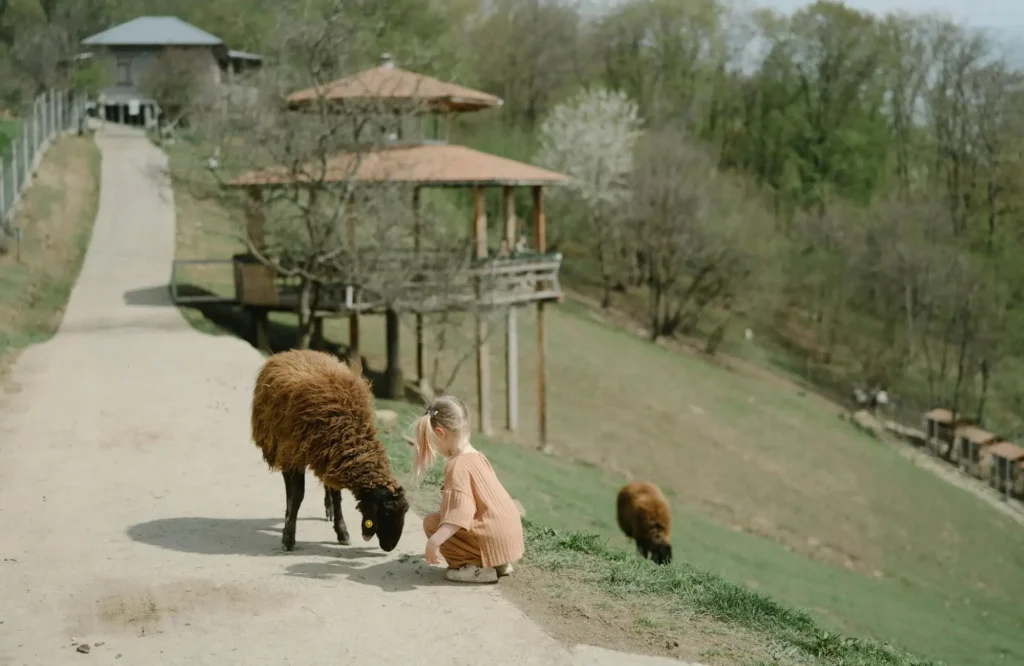
These 20 prompts are designed to be genuinely fun rather than homework-adjacent.
A few will produce giggles. 😁
Several will produce answers that are worth keeping. At least one will produce a story so creative and so entirely unhinged that you’ll be sharing it at family gatherings for years.
5 Tips For Journaling With Kids This Spring
Before the prompts, here are a few things that make the whole experience considerably more enjoyable for everyone involved.
- Let them decorate the journal first. A journal that feels personally theirs gets used considerably more than a plain notebook handed over with instructions. Stickers, washi tape, a hand-drawn cover — ten minutes of personalization buys weeks of willing participation.
- Write alongside them. Kids are significantly more likely to engage with journaling when an adult is doing it too, rather than supervising from a distance. Pick a prompt, write your own answer, share it. The results are usually entertaining for everyone.
- Never correct the writing. The journal is a safe space for thoughts rather than a grammar exercise. Spelling, punctuation, and sentence structure are all beside the point. The thinking is the point.
- Keep sessions short. Ten to fifteen minutes is plenty for most ages. The goal is to end while it’s still fun rather than pushing past the point of willing engagement into reluctant endurance.
- Celebrate the weird answers. The most creative, most unexpected, most gloriously bizarre responses deserve the most enthusiasm. The child who writes that their spirit animal is a tired librarian named Gerald is doing something genuinely impressive and should know it.
EVERYONE’S CLICKING ON:
12 Creative Easter Wooden Egg Painting Ideas That You Can Keep Forever


19 Wrap Recipe Ideas That Prove Lunch Doesn’t Have To Be Boring
French Sunday: The Slow, Dreamy Day Ritual You Didn’t Know You Needed

How To Romanticize Your Life at Home (Without Spending a Fortune)

15 Spring Mocktail Recipes That Taste Like the Season in a Glass
20 Spring Journal Prompts
Imaginative and Creative Prompts
The prompts that give a child’s imagination the most room to run and produce the most entertainingly unpredictable results.
1. If spring had a superpower, what would it be and how would it use it?
Super speed for growing flowers? The ability to make it rain exactly when needed and stop exactly when it isn’t? The power to make every morning smell like fresh-cut grass? There is no wrong answer here, and the right answers are consistently delightful.
2. You wake up one spring morning and discover you can talk to animals. What’s the first animal you find, and what do you talk about?
The classic fantasy prompt with a spring twist. What does the robin on the fence actually think about? What complaints does the neighbor’s dog have? What extremely strong opinions does a butterfly hold? Kids take this one seriously in the best possible way.
3. Write a story about a flower that decides it doesn’t want to bloom this spring. What’s going on with it, and how does the story end?
The reluctant flower prompt produces some genuinely moving short stories from kids who are perhaps processing their own feelings about new beginnings through the convenient metaphor of a stubborn daffodil. Literature in miniature.
4. If you could design your perfect spring day with absolutely no rules and unlimited budget, what would it look like from the moment you woke up to the moment you went to sleep?
The no-rules perfect day prompt reliably reveals both genuine personality and the specific things a child most wants that they haven’t been given yet. Useful parenting research disguised as a fun writing exercise.
5. A tiny fairy moves into your garden this spring. Describe what their house looks like, what they eat for breakfast, and what they do all day.
The world-building prompt that gives highly imaginative kids enough structure to launch from and enough freedom to go absolutely wherever they want with it. The breakfast detail specifically produces inspired results every time.
Nature and the Spring Season
Prompts that connect kids to the specific sensory experience of the spring season and the natural world waking up around them.
6. Go outside for five minutes and come back and write down everything you noticed. What did you see, hear, and smell?
The observation prompt that doubles as a mindfulness exercise and produces some surprisingly poetic responses from children who’ve been given permission to notice things carefully. Also, it’s a reliable way to get a child outside for five minutes, which is never a bad outcome.
7. Describe spring using only your five senses. What does it look like, sound like, smell like, taste like, and feel like?
The sensory spring prompt that produces genuinely beautiful writing when kids engage with it properly. The taste of spring is always the most interesting answer — some go with strawberries, some go with rain, some go with the specific flavor of ice cream eaten outside for the first time of the year.
8. If spring were a person, what would they look like, what music would they listen to, and what would their most annoying habit be?
Personification with a cheeky twist. The most annoying habit question is what makes this prompt, because a child who has thought carefully about spring’s most annoying habit (probably something to do with unpredictable weather or making everyone sneeze) has thought carefully about spring in a way that a straightforward description prompt wouldn’t produce.
9. What’s your favorite thing about spring, and why is it better than your favorite thing about any other season?
The seasonal loyalty prompt that occasionally produces surprisingly passionate defences of spring over summer, autumn, and winter. The why is where the genuine thinking happens and where the most interesting answers live.
10. Write about a time you spent outside in spring that you still remember. What made it so good?
The spring memory prompt that works for kids of any age and produces answers that are worth keeping in the journal for a long time. The specific details children remember about good outdoor experiences, the exact color of the sky, the precise feeling of grass under bare feet, are consistently more vivid and more specific than adult memories of the same kind.
Spring Break and School
Prompts for the spring break season specifically — and for processing the school year that’s been running since September.
11. It’s the first day of spring break. Describe exactly how it feels and what you’re planning to do with all that freedom.
The spring break anticipation prompt that captures the specific, glorious feeling of the last school day before a holiday, a feeling worth recording while it’s happening rather than just living through it.
12. If you could go anywhere in the United States for spring break with your family, where would you go and what would you do there?
The travel fantasy prompt that reliably reveals both genuine geographical interests and the specific activities a child most wants to do that haven’t happened yet. Also useful for actual spring break planning if the answers are convincing enough.
13. Write about the best spring break you’ve ever had. What made it so good, and what would make this year’s even better?
Looking back at last spring or previous springs to identify what genuinely made them good, a prompt that connects past experience to present anticipation in a way that’s both reflective and forward-looking.
14. What’s the one thing you’re most looking forward to doing this spring that you couldn’t do in winter? Describe it in as much detail as possible.
The seasonal permission prompt, the thing that only spring allows. For some kids, it’s a specific outdoor activity. For others, it’s the feeling of being outside without a coat. For a surprising number, it’s ice cream eaten while walking somewhere, which turns out to be a deeply specific and deeply relatable spring pleasure.
15. Write a list of ten things you want to do before summer arrives. Then circle the three most important ones.
The spring bucket list prompt has a prioritization exercise built in. The circling is the most revealing part; what a child considers most important from their own list tells you considerably more about their values and desires than the full list does.
Self-Discovery and Growing Up
The prompts that help kids think about themselves, who they are, how they’ve grown, and what they’re looking forward to — in a way that feels genuinely exploratory rather than like a school assignment.
16. Spring is all about things growing and changing. What’s one way you’ve grown or changed since last spring?
The personal growth prompt that works for kids of any age because there is always something, a skill learned, a fear overcome, a friendship changed, a new interest discovered. The answers are consistently more thoughtful than the question’s simplicity suggests.
17. What’s something you want to get better at this spring? What’s your plan for actually making that happen?
The seasonal goal prompt with a practical follow-up question. The plan question is what makes this one useful — it moves the answer from wishful thinking toward something actionable, even if the plan is fairly simple.
18. If you could teach someone one thing you’re really good at, what would it be and how would you explain it?
A confidence-building prompt disguised as a writing exercise. The thing a child chooses to teach reveals genuine self-knowledge about their own abilities, and the explanation they construct reveals both how they understand that ability and how they think about communicating it to others.
19. Write about someone in your life who feels like spring to you — warm, full of energy, and makes everything feel more alive. What makes them that way?
The people-as-seasons prompt that produces some of the most genuinely moving responses in this list. The person a child identifies as their spring person and the specific reasons they give are worth keeping long past the journal itself.
20. Write a letter to yourself to open next spring. Tell your future self what this spring was like, what you’re hoping for, and what you want them to remember.
The time capsule prompt and the one worth doing last — a letter from this spring self to the next one, capturing the specific quality of this moment in time before it becomes last spring rather than this one. Seal it in the journal or in an envelope tucked inside the cover. The opening of it next year is its own small magic.
A Note For Parents and Teachers
The prompts that produce the strongest responses are rarely the ones that seem most obviously interesting from an adult perspective.
The fairy house breakfast prompt and the spring superpower question consistently outperform what looks like the more meaningful self-discovery prompts — until a child decides they’re ready for one of the deeper ones and goes somewhere completely unexpected with it.
Trust the process. Supply the journal, the prompt, and the time. Let the writing go wherever it goes without directing it toward what seems like the right answer.
If a child writes three pages about a tired librarian fairy named Gerald who doesn’t want to bloom this spring because he’s been doing it for four hundred years and frankly finds the whole thing exhausting — that’s not a wrong answer.
That’s a writer. ✍🏽