

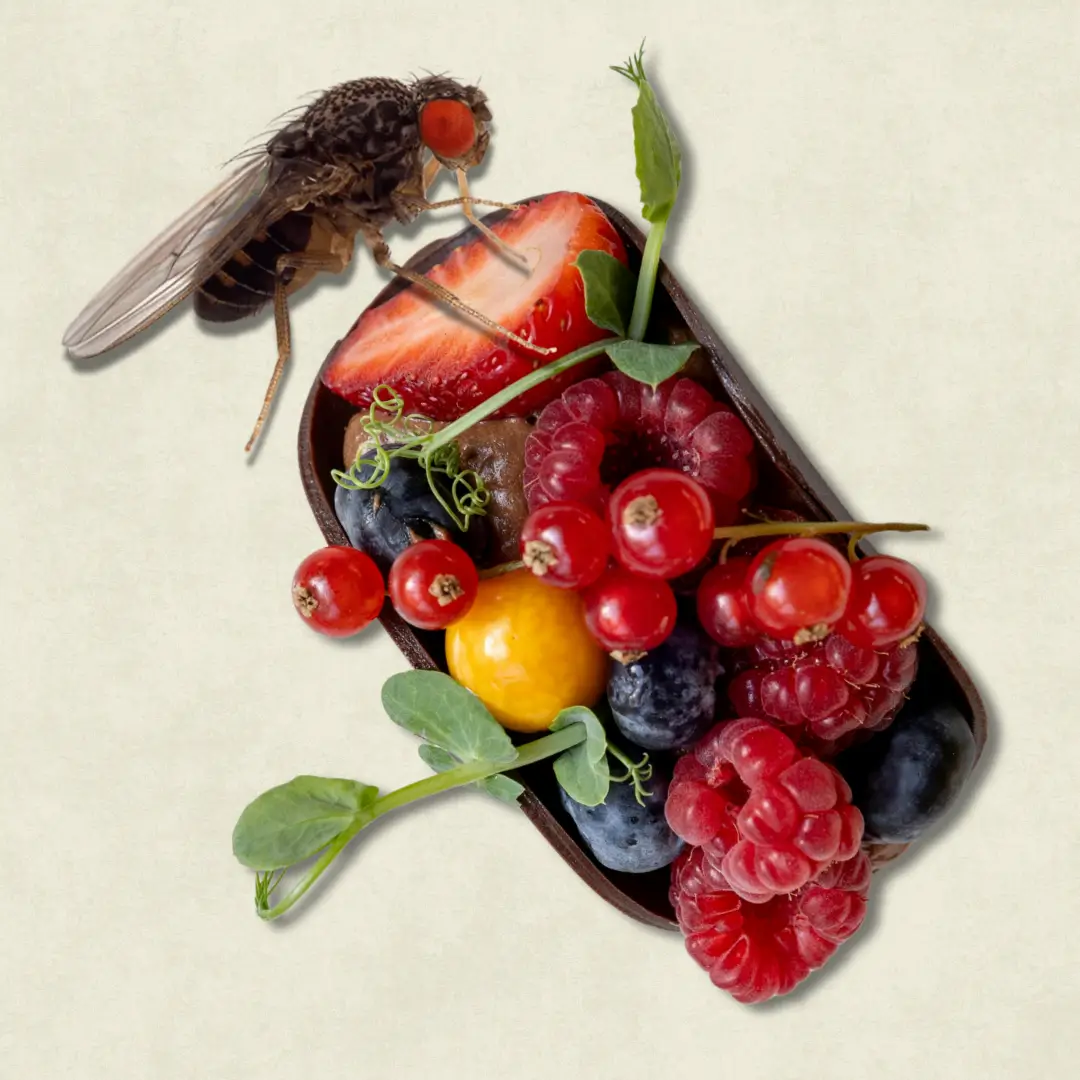
Fruit flies are one of those infuriating household problems that appear out of nowhere, multiply at a genuinely alarming rate, and make you feel like your home is somehow failing — even when it’s not.
One overripe banana, and suddenly there are thirty of them hovering around your fruit bowl like they pay rent. 😒
The good news is they’re easier to deal with than they seem. A few targeted interventions, some basic preventative habits, and they’re gone — usually within a week.
Here’s exactly what to do!
What Are Fruit Flies?
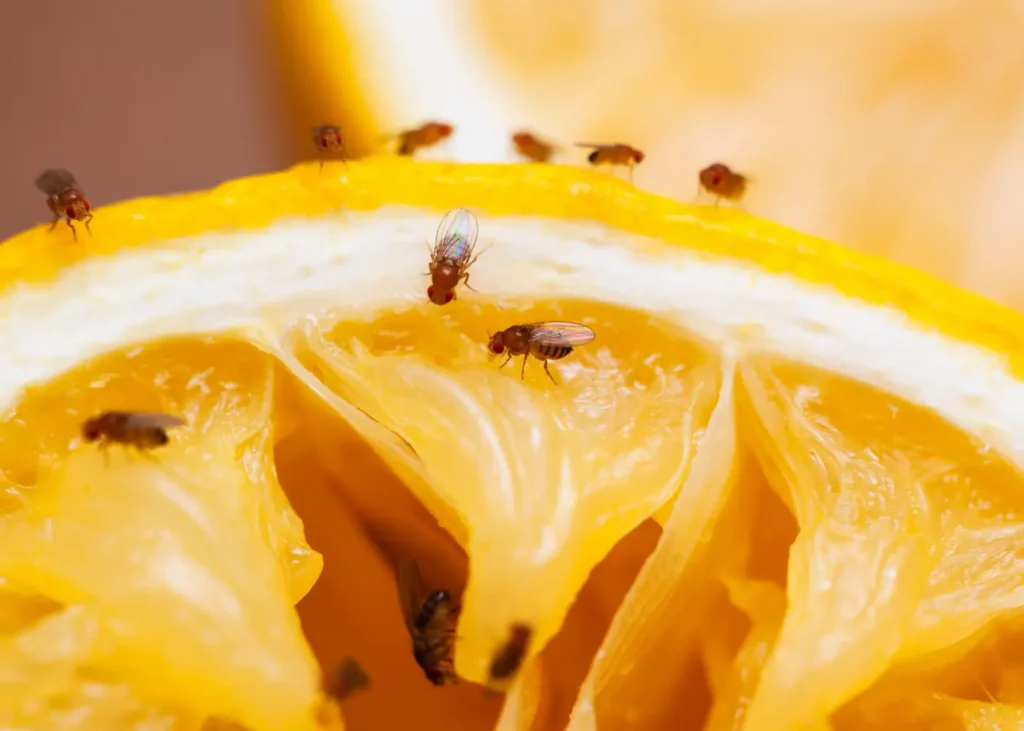
Fruit flies are tiny insects — usually around 3-4mm long — that are drawn to fermenting or overripe fruit and vegetables.
They’re one of the most common household pests, particularly in warmer months, and are recognizable by their small size, reddish-brown colour, and the way they hover in slow, erratic patterns around food and drinks.
They’re harmless in the sense that they don’t bite, but they can carry bacteria from surface to surface — which is reason enough to deal with them promptly.
Their real offence is mostly just being deeply irritating in a way that feels disproportionate to their size.
Why Do Fruit Flies Appear?
Before getting into solutions, it helps to understand what actually attracts them. Fruit flies are drawn to fermentation — the smell of ripening or rotting fruit, vegetables, and anything containing sugar or yeast.
They can breed in drains, in the soil of houseplants, in recycling bins, and in the sticky residue at the bottom of a juice bottle you forgot to rinse.
They don’t need much. A damp cloth left on a counter is technically enough.
They’re also faster breeders than feels fair — a single female fruit fly can lay up to 500 eggs in her lifetime, and those eggs hatch within 24 to 30 hours. Which explains how a minor inconvenience becomes a full infestation seemingly overnight.
EVERYONE’S CLICKING ON:

25 Night Journal Prompts That’ll Help You Actually Switch Off

10 Easy Sunday Habits That’ll Make Your Entire Week Feel Calmer

15 Healthy Breakfast Meal-Prep Recipes That Make Mornings Actually Manageable

9 DIY Bar Shelf Ideas That Make Your Home Look Seriously Intentional

The “That Girl” Morning Routine That Actually Works (+ FREE Checklist)

13 Vegan Air Fryer Recipes That Prove Plant-Based Doesn’t Mean Boring
How To Get Rid Of Fruit Flies Fast!
The Apple Cider Vinegar Trap
This is the most effective DIY solution, and it works quickly.
Pour a small amount of apple cider vinegar into a glass or jar — about an inch is enough — add a drop of dish soap to break the surface tension, and cover the top tightly with cling film. Poke a few small holes in the surface with a toothpick.
The fruit flies are attracted to the vinegar, crawl through the holes, and can’t get back out. It sounds simple because it is, and it works.
Replace it every couple of days and keep it near the area where they’re most concentrated. Most people see a significant reduction within 48 hours.
SHOP APPLE CIDER VINEGAR
Red Wine Trap
If you happen to have a bottle of red wine that’s past its best, don’t pour it out. Leave the bottle with a small amount of wine remaining on the counter near the infestation.
Fruit flies are equally attracted to fermented wine and will find their way in. The narrow neck of the bottle does the trapping for you.
Store-Bought Fruit Fly Traps
If DIY isn’t your thing, the store-bought options have improved significantly.
Sticky traps, small liquid-based traps, and plug-in UV light traps are widely available, largely unobtrusive, and effective enough to be worth the minimal cost — particularly for a more established infestation.
SHOP STICKY LABEL TRAP OR PLUG-IN UV LIGHT FLY TRAP
Clean Your Drains
This one gets overlooked more than it should.
Fruit flies breed in the organic matter that accumulates in kitchen drains, and a trap on the counter won’t solve a drain problem.
Pour boiling water down your sink drain, followed by a mixture of baking soda and white vinegar — let it fizz for a few minutes, then flush again with hot water.
For a persistent drain infestation, a specialist drain gel cleaner is worth using.
SHOP BAKING SODA, WHITE VINEGAR & DRAIN GEL CLEANER
Check Your Houseplants
Overwatered houseplants are a surprisingly common source of fruit flies — specifically fungus gnats, which look almost identical and are often mistaken for fruit flies.
If the infestation seems to be centred around your plants rather than your kitchen, the soil is likely the issue.
Allow the soil to dry out completely between waterings, and consider a sticky trap placed near the base of the plant.
How To Prevent Fruit Flies From Coming Back
Getting rid of fruit flies is satisfying. Keeping them gone requires a few consistent habits that, once they’re in place, become completely automatic:
- Store fruit in the fridge during warmer months. Room temperature fruit is the single biggest attractant. Moving it to the fridge — particularly stone fruits, berries, and anything that’s close to ripe — removes the primary draw almost entirely.
- Don’t leave dishes in the sink. Even a small amount of residue on a plate or the sticky rim of a juice glass is enough. Rinse dishes promptly, or at least rinse before leaving them to soak.
- Empty your bin regularly. Kitchen bins are a breeding ground — particularly in summer. Empty them more frequently than you think necessary and keep the bin itself clean. A quick spray and wipe of the interior once a week makes a real difference.
- Rinse recycling before it goes in the bin. Bottles, jars, and tins with any residue left in them are a significant attractant. A quick rinse takes seconds and removes the problem entirely.
- Keep surfaces clean and dry. Fruit flies need moisture as much as they need food. Wiping down counters, not leaving damp cloths sitting out, and keeping the area around your sink dry removes the conditions they need to thrive.
- Deal with overripe produce immediately. The moment fruit starts to turn, either eat it, freeze it, or compost it outside. Don’t leave it in the bowl hoping to get to it tomorrow — that’s exactly the window fruit flies need.
When To Call In Professional Help
For the vast majority of fruit fly situations, the methods above will resolve the problem within a week.
If you’ve tried everything consistently and the infestation persists, it’s worth calling a pest control professional — not because the situation is dire, but because a persistent infestation usually indicates a breeding source you haven’t located yet.
A professional will find it faster than you will.
Final Thoughts
Fruit flies are annoying in a deeply disproportionate way — small enough to seem trivial, persistent enough to feel genuinely maddening.
But they’re also one of the more solvable household problems once you know what you’re actually dealing with.
TRY THESE NEXT: