
If you ask a child what they’re grateful for, chances are they’ll either say pizza or their PS5.
And honestly? I think that’s a perfectly fine place to start. 🌱
As a mom, I’ve spent years trying to nurture gratitude in my son, and now that he’s 18, I can genuinely say it’s one of the things I’m most glad I did.
Raising a kid in the age of perfectly filtered faces and flashy IG reels is no joke!
When everything online is curated to look flawless, teaching him to find genuine appreciation for the real, ordinary, sometimes messy parts of life felt more important than ever.
PIN FOR LATER 📌
It wasn’t always smooth sailing, and there were plenty of eye rolls along the way, but the small, consistent habits we built together really did stick. Phew! 😅
My mom was a teacher for 25 years, and she always said the same thing: kids don’t need grand gestures, they need simple practices repeated often enough to become second nature.
So whether you’re a parent looking for something new to try at home, or a teacher wanting to bring more intentional connection into your classroom, this list is for you.
These 15 gratitude activities for kids are practical, fun, and genuinely doable — no fancy materials or elaborate planning required.
Key Takeaways
- Kids who regularly practice gratitude show improved mood, better sleep, and stronger social connections.
- Gratitude activities work for all ages — from toddlers to tweens — and can be adapted for home or classroom settings.
- The best gratitude practices are consistent, age-appropriate, and above all, fun.
Why Teaching Gratitude to Kids Actually Matters
Gratitude is more than good manners. It’s a mindset, and it’s one that can genuinely shape how children experience the world around them.
Studies from Harvard Health show that practicing gratitude boosts optimism, reduces stress, and has even been linked to physical health benefits
like getting more exercise and fewer trips to the doctor.
The Anxiety and Depression Association of America also highlights that gratitude can improve sleep quality, increase feelings of social connection, and reduce the risk of depression in young people.
These aren’t small things. And the even better news?
You don’t need a fancy curriculum or a lot of time. Simple, consistent
practices are what make the difference. These 15 activities are a great place to start.
15 Gratitude Activities for Kids
1. The Gratitude Journal
Recommended age: 6 and up
Journaling is one of the most well-researched gratitude practices out there, and it works just as well for kids as it does for adults. The key is keeping it low-pressure.
There’s no wrong answer, no minimum word count, and no pressure to be profound. Listing three things they’re grateful for each day, even if one of them is pizza, is genuinely enough.
What you’ll need: A notebook they love (let them pick it out), pens or markers.
How to do it: Set a regular time, like before bed or right after school, and encourage them to write or draw three things they’re grateful for. For younger kids or reluctant writers, prompts help. Try ‘What made you smile today?’ or ‘Name one person who made your day better and why.’
YOU MAY ALSO LIKE: 20 Spring Journal Prompts For Kids That Make Writing Actually Fun
2. The Thankful Tree
Recommended age: 5 to 12 years
This is a classic for good reason. It’s visual, creative, and the finished product is something kids genuinely feel proud of. Watching the tree fill up with leaves over time also gives children a tangible reminder of everything good in their lives.
What you’ll need: Construction paper in various colors, scissors, markers, and a large sheet of paper or poster board for the trunk.
How to do it: Cut out a tree trunk and stick it to the poster board. Then have kids cut out leaf shapes and write or draw one thing they’re grateful for on each leaf. Add leaves regularly — weekly works well — and watch the tree grow.
Here’s a quick tutorial:
3. The Gratitude Jar
Recommended age: 4 and up
There’s something so satisfying about a gratitude jar. It’s a family or classroom activity that builds up quietly in the background, and then becomes this beautiful collection of good things. Opening it up on a hard day is genuinely uplifting.
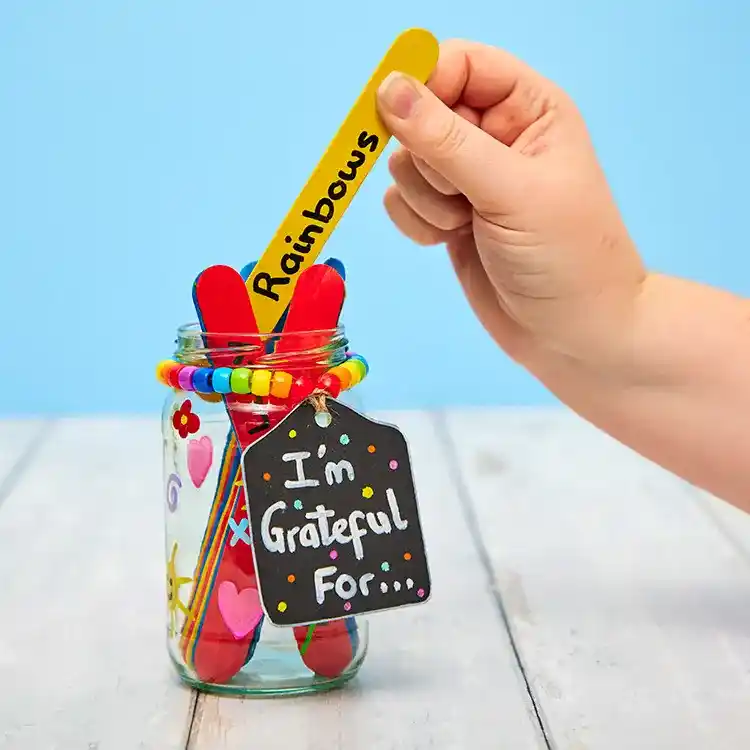
What you’ll need: A glass jar, small pieces of paper, pens.
How to do it: Keep the jar somewhere visible, like the kitchen counter or the classroom windowsill. Whenever someone feels grateful for something, they write it on a slip of paper and drop it in. Make it a habit to read through some of the notes together at the end of the week or month.
EVERYONE’S CLICKING ON:


4. Thankful ABC
Recommended age: 5 and up
This one is great because it pushes kids to think creatively. Going through the whole alphabet means they can’t just default to the same three answers every time. It’s a fun challenge that naturally broadens how they think about gratitude.
What you’ll need: Paper, pencils or markers, and an alphabet template for younger children.
How to do it: Challenge kids to come up with something they’re grateful for, starting with each letter of the alphabet. Younger children might need some prompting, and that’s totally fine. Once the list is complete, talk through some of their answers together. Ask: ‘Why are you grateful for this? How does it make you feel?’
5. The Gratitude Walk
Recommended age: 4 and up
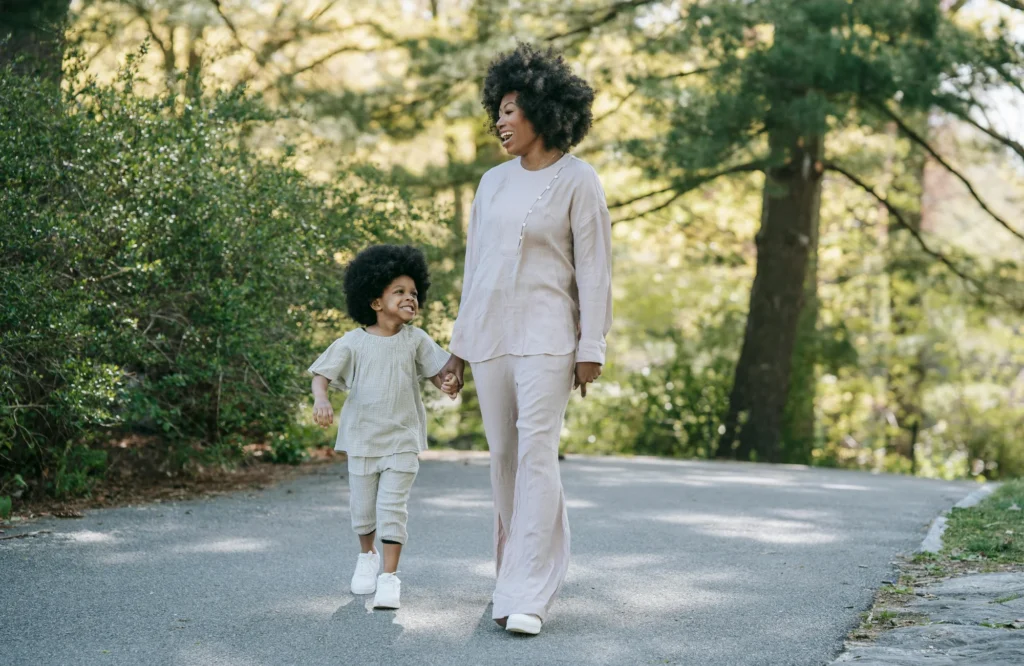
Getting outside and moving is already great for kids’ mental health, and pairing it with a mindfulness practice makes it even more powerful. The gratitude walk encourages children to slow down and really notice the world around them — a skill that serves them well beyond the activity itself.
What you’ll need: Comfortable shoes, weather-appropriate clothes, and an open mind.
How to do it: Before you head out, set the intention. Something like: ‘As we walk, let’s notice things around us that we’re glad exist.’ Encourage them to use all their senses. What can they see, hear, smell, or feel that makes them feel good? When you get back, share what you each noticed.
6. Gratitude Scavenger Hunt
Recommended age: 4 to 10 years
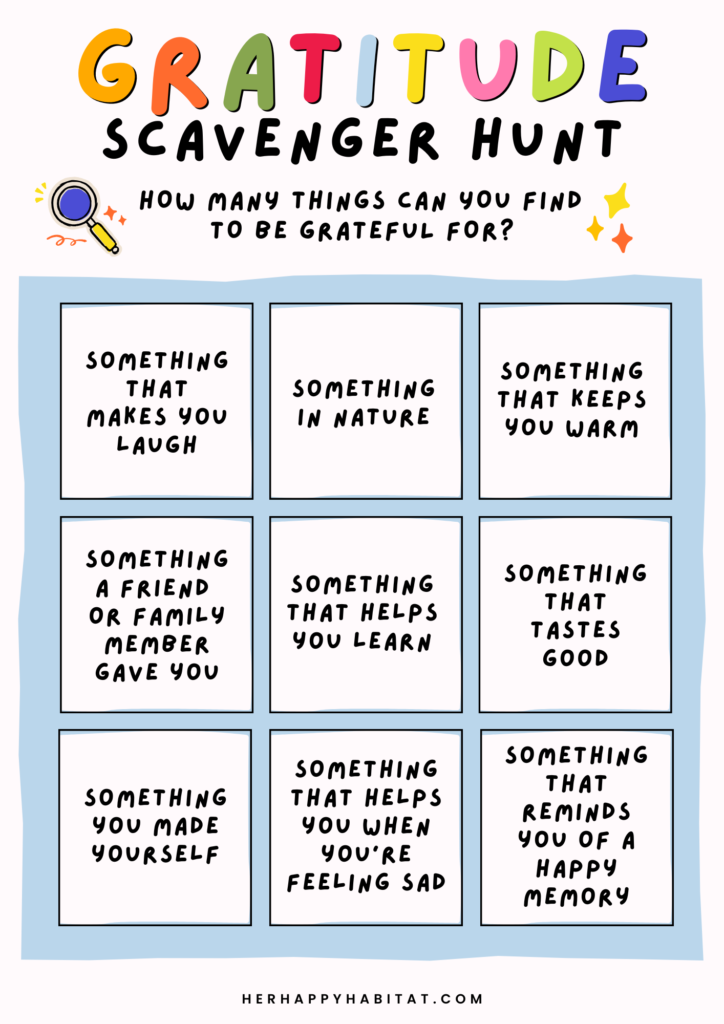
A gratitude scavenger hunt takes the open-ended nature of the gratitude walk and adds structure and a little friendly competition. Kids love a mission, and this one comes with the bonus of teaching them to find joy in everyday things.
What you’ll need: A printed or handwritten list of items, a pencil to check things off, and a camera (optional).
How to do it: Create a list of things to find that naturally prompt gratitude — like something that makes you laugh, something in nature, something a friend gave you, or something that keeps you warm. As they find each item, encourage them to say why they’re grateful for it.
And if you want to skip the prep, I’ve got a FREE printable gratitude scavenger hunt ready to go — just click the download button below and get started.
7. Gratitude Letters
Recommended age: 7 and up
Writing a gratitude letter to someone who has made a difference in your life is one of the most impactful gratitude exercises out there. For kids, it’s also a beautiful way to strengthen relationships and develop empathy.
What you’ll need: Paper, pens, envelopes if you’re mailing them.
How to do it: Ask the child to think of someone who has been kind to them, helped them, or made them feel special. Then help them write a short letter telling that person what they did and why it meant so much. If possible, deliver the letter in person for maximum impact.
8. Gratitude Collage
Recommended age: All ages
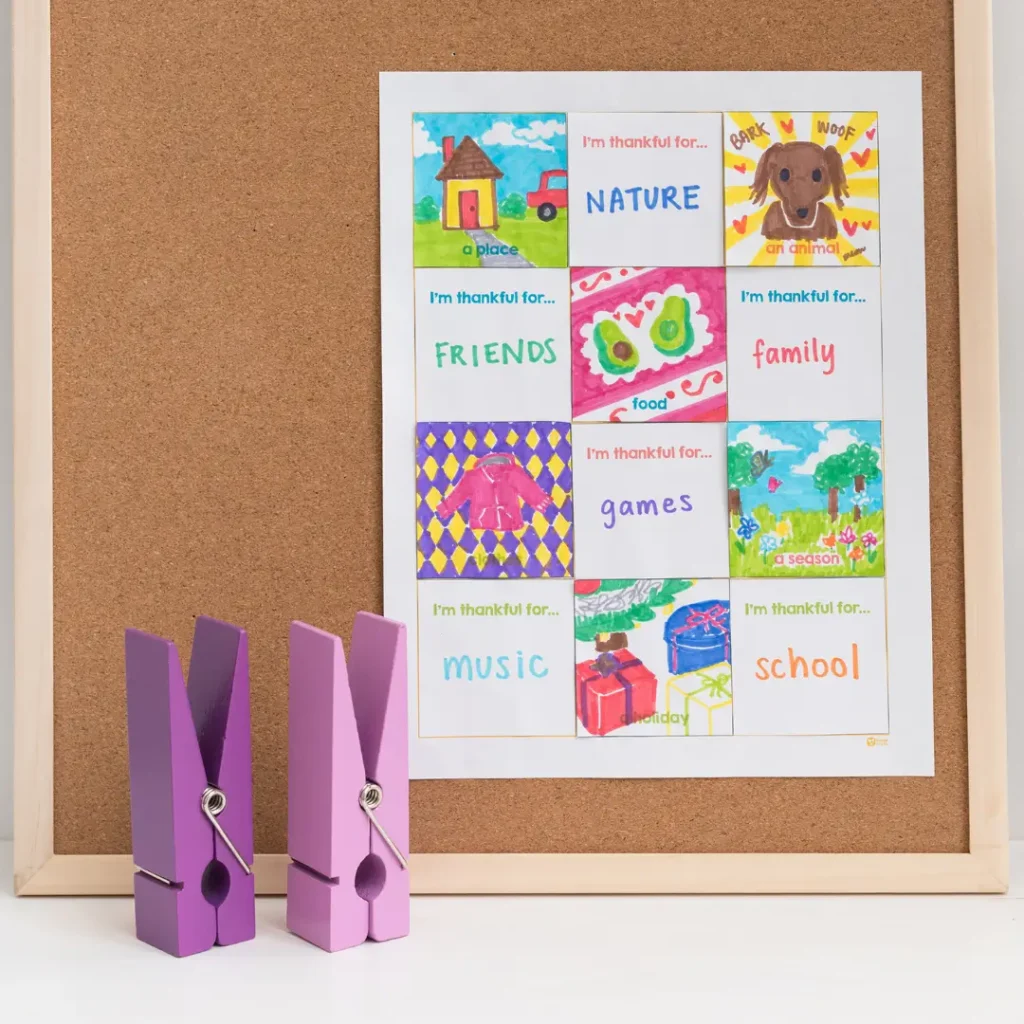
This is a wonderful activity for visual learners and kids who prefer to express themselves creatively rather than through writing. Research also suggests that mindfulness, which collage-making naturally encourages, is linked to higher levels of gratitude. Plus, the finished product makes for great wall art!
What you’ll need: Old magazines and newspapers, scissors, glue, and a large sheet of paper or card.
How to do it: Ask kids to cut out images, words, or colors that represent things they’re grateful for and arrange them however they like on the paper. There’s no right or wrong way to do it. They can also add drawings, stickers, or written notes to personalize it further
9. Thankful Hearts
Recommended age: 4 and up
Simple, sweet, and endlessly versatile. Thankful Hearts works as a quiet independent activity, a group craft, or even a classroom display. It’s also a lovely one to tie into lessons about kindness or connection.
What you’ll need: Construction paper, scissors, markers, decorative materials like stickers or glitter.
How to do it: Have kids cut heart shapes from the construction paper, then write or draw something they’re grateful for on each one. Arrange them on a larger piece of paper or string them together to create a display. In a classroom setting, doing this as a group creates a really warm visual reminder of everything the community appreciates.
10. The Gratitude Game
Recommended age: 6 to 12 years
This is the activity to pull out when you want something interactive and conversation-starting. It works brilliantly as a family dinner game or a classroom icebreaker, and the prompts can spark some surprisingly thoughtful conversations.
What you’ll need: Popsicle sticks, markers, a jar or container.
How to do it: Write a gratitude prompt on each popsicle stick. Ideas include: ‘Name a person who makes your life better and say why,’ ‘Describe something in nature that you love,’ or ‘Share a skill you’re glad you have.’ Place the sticks in the jar and take turns picking one and sharing. Keep it light and fun, no pressure to go deep.
11. Gratitude Rocks
Recommended age: 4 to 10 years
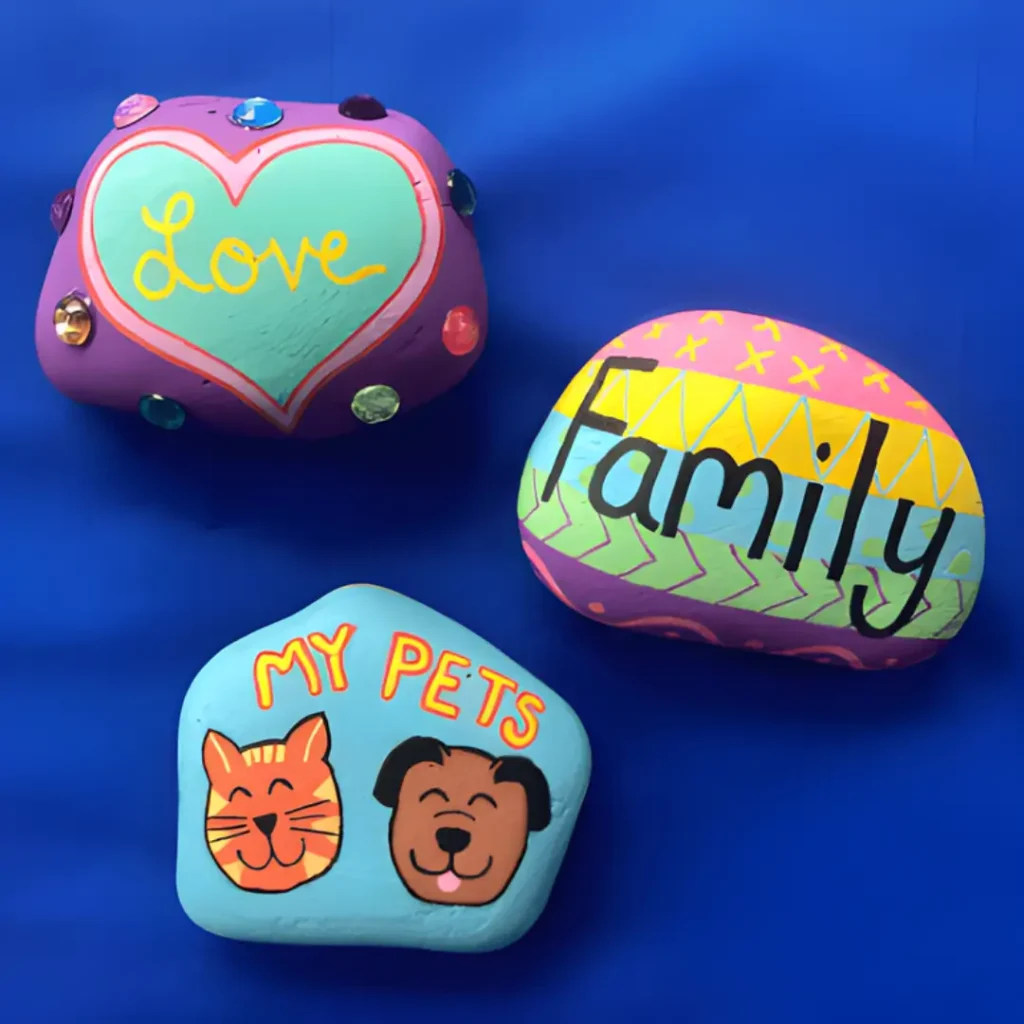
This one is tactile, creative, and oddly calming. Kids love it, and the finished rocks become little physical reminders of gratitude that they can keep in their pockets, on their desks, or give away as gifts.
What you’ll need: Smooth rocks or pebbles, acrylic paint or paint pens, clear varnish (optional).
How to do it: Have kids paint or draw something they’re grateful for on their rock. It could be a word, a name, a symbol, or an image. Once dry, they can keep it somewhere meaningful or give it to someone they appreciate. For younger kids, let them paint freely and then ask them what their art represents.
12. Gratitude Yoga
Recommended age: 5 to 11 years
Combining movement with mindfulness is such a powerful combination for kids. Gratitude yoga encourages them to slow down, breathe, and reflect — and the physical movement makes it feel active and engaging rather than like sitting still for a talk.
What you’ll need: A yoga mat or clear floor space, comfortable clothing.
How to do it: Start with some gentle warm-up stretches and deep breathing to settle everyone down. Move through a simple sequence of poses, and at each pose, invite kids to think about or share one thing they’re grateful for. Keep the tone calm and encouraging throughout.
Here’s a helpful video from Cosmic Kids Yoga:
13. Gratitude Vision Board
Recommended age: 8 and up
A gratitude vision board is a slightly more grown-up version of the gratitude collage, and it works really well for older kids and tweens. It blends appreciation for what they already have with excitement about what’s ahead — a genuinely healthy headspace to be in.
What you’ll need: Magazines, printed photos, scissors, glue, a large sheet of card or poster board, markers.
How to do it: Encourage kids to find and cut out images and words that represent both things they’re currently grateful for and things they’re excited about or hoping for. Arrange them on the board however feels right to them. This is a great one to revisit at the end of the year and reflect on.
14. The Gratitude Calendar
Recommended age: 6 and up
Consistency is what makes gratitude practices stick, and a gratitude calendar is a really simple way to build that habit. It also makes the practice visible, which is a quiet but effective motivator for kids.
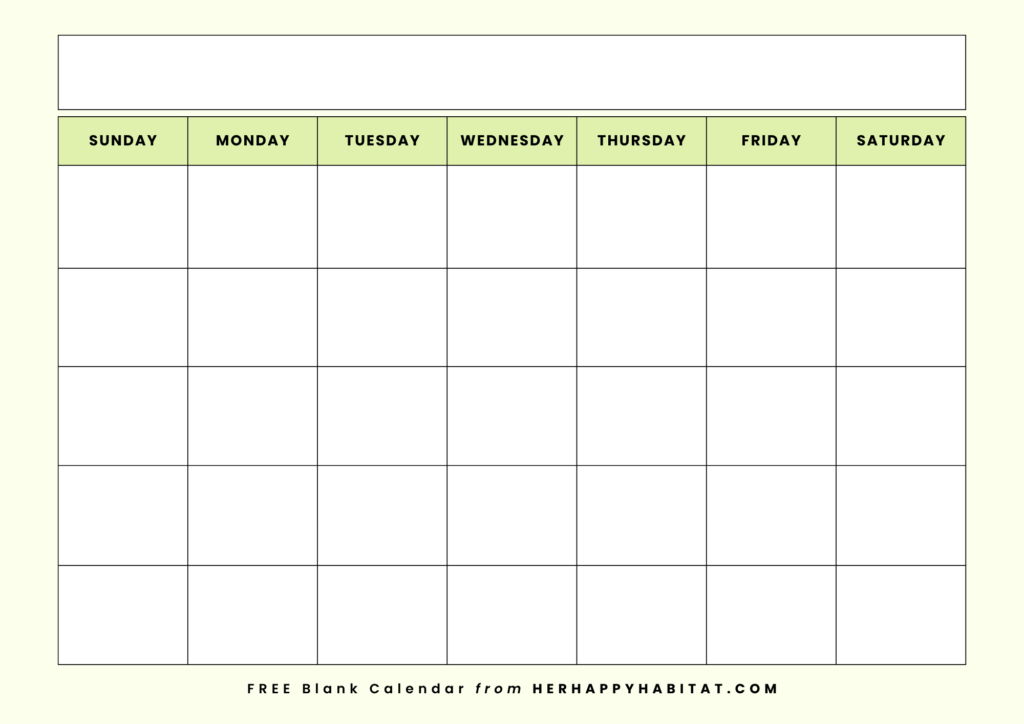
What you’ll need: A blank monthly calendar printout or a whiteboard, markers.
How to do it: At the start of each month, fill in the calendar with one gratitude prompt or challenge per day. Things like ‘Write down something that made you laugh this week’ or ‘Tell a family member one thing you appreciate about them.’ Review it together at the end of the month and celebrate how much there was to be grateful for.
And if you’d like a little help getting started, I’ve created a FREE blank gratitude calendar printable. Just click the download button below.
15. Gratitude Meditation
Recommended age: 6 and up
Guided meditation might sound a bit ambitious for kids, but age-appropriate gratitude meditations are genuinely accessible and incredibly calming. They’re a great tool for winding down at the end of the day or resetting after a stressful moment.
What you’ll need: A quiet space, comfortable seating or lying-down area, and a simple script or audio guide.
How to do it: Have kids get comfortable and close their eyes. Guide them gently through a short meditation, asking them to picture someone they love, a place that makes them feel safe, and something that made them smile recently. Encourage slow, deep breathing throughout. Even five minutes can make a real difference.
Tips for Making Gratitude Stick
The activities are the easy part. Making gratitude a genuine, lasting habit takes a little more intention, but it’s absolutely doable with a few simple strategies.
- Model it yourself. Kids take their cues from the adults around them. When you share what you’re grateful for openly and genuinely, it normalizes the practice and makes it feel natural rather than forced.
- Keep it consistent, not perfect. A two-minute gratitude check-in every day is worth so much more than an elaborate activity once a month. Build it into an existing routine, like dinner time or the school morning routine.
- Let them lead. The more ownership kids feel over their gratitude practice, the more meaningful it becomes. Ask them what they want to be grateful for rather than telling them. You might be surprised by what they come up with.
- Celebrate the small stuff. Gratitude doesn’t have to be reserved for big moments. Teaching kids to appreciate ordinary, everyday things, like a sunny afternoon or a good book, is where the real magic happens.
Final Thoughts
Gratitude is a skill, and like any skill, it gets better with practice.
The activities here are just a starting point. The real goal is to help kids build a habit of noticing the good things in their lives —even on the days when the good things feel small or hard to find.
Start with one activity that feels manageable and see how it goes. There’s no pressure to do it perfectly. The fact that you’re thinking about this at all is already a pretty great thing to be grateful for.