

Let’s address the irony upfront: advice about starting a hobby usually comes wrapped in the kind of relentless enthusiasm that’s exhausting to read when you’re already running on empty.
“Find your passion!” “Try something new!” “Sign up for a class!”…
All perfectly reasonable suggestions for someone who has the bandwidth for them, but completely useless for someone who comes home from work and genuinely cannot conceive of doing anything other than lying horizontal for three hours.
PIN FOR LATER 📌
If that’s where you are, tired in the chronic, bone-deep way that modern life has a particular talent for producing, this guide is written for you specifically.
Not the aspirational version of you who has energy to spare. The current one.
Why Low Energy Makes Starting Anything Feel Impossible
Before getting into the how, it’s worth understanding why this is genuinely hard, because it’s not laziness, and it’s not a character flaw, and treating it like either of those things isn’t useful.
When you’re chronically depleted from work, caregiving, stress, poor sleep, or simply the relentless administrative weight of adult life, your brain’s capacity for new learning and voluntary effort is genuinely reduced.
Decision fatigue is REAL.

Executive function, which is the cognitive ability to initiate, plan, and follow through on tasks, is one of the first things to suffer when energy reserves are low.
This is why the standard hobby advice doesn’t land when you’re exhausted.
Starting something new requires exactly the cognitive resources that depletion strips away first.
Knowing this is actually useful, because it reframes the problem: it’s not about finding motivation.
It’s about removing the friction between you and the thing until the barrier is low enough that even a depleted version of you can clear it.
The Principles That Actually Help
Lower The Bar Considerably—And Then Lower It Again
The single most effective mindset shift for starting a hobby when you’re exhausted is aggressively redefining what “doing the hobby” looks like.
Ten minutes counts. Five minutes counts.
Watching a YouTube video about a craft you haven’t tried yet counts; it’s building the neural pathways of interest and familiarity that make actually starting easier when the energy is there.
Reading one chapter counts. Swatching one color of paint counts.
The version of hobby engagement that looks nothing like the highlight reel, the five stitches of embroidery before you put it down, the three sentences of journaling, or the single watercolor wash before you run out of steam still counts.
Resistance to this idea is worth examining, because it’s usually perfectionism dressed up as standards.
Choose For Restoration, Not Achievement
This is the distinction that changes everything.
Most people, when they think about picking up a hobby, default to something skill-based, something they can get better at, track progress in, and eventually be good at.
And that’s a completely valid goal when you have the energy for it!
When you don’t, the more useful question is, “What kind of activity feels like it gives energy back rather than taking more?”
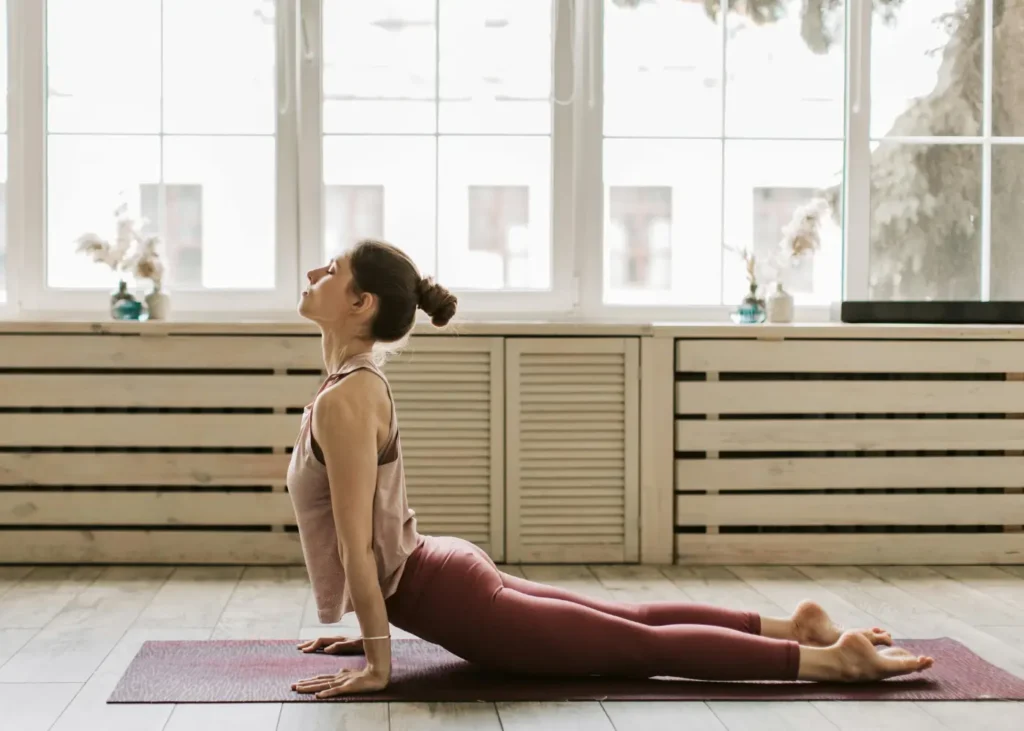
For some people, that’s something physical and repetitive—walking, swimming, or gentle yoga.
For others, it’s something sensory and absorbing—cooking, gardening, working with clay.
For others, it’s something quiet and contained—reading, puzzles, or drawing without any particular goal.
Restorative hobbies aren’t lesser hobbies.
They’re often the ones that become most deeply embedded in a life because they fit into the actual texture of it rather than requiring the best version of the day to show up.
Make It Stupid Easy To Start
The more steps between you and the hobby, the less likely it is to happen on a low-energy day.
This is just human psychology; friction is the enemy of habit formation, particularly when reserves are depleted.
Set up your embroidery hoop and leave it out.
Keep your journal on your pillow. Put your walking shoes by the door. Keep the watercolors on the kitchen table rather than in a cupboard.
The principle is simple: the hobby should be the path of least resistance, not a project in itself to set up before you’ve even begun.
This sounds almost embarrassingly basic, and it works better than most people expect.
YOU MAY ALSO LIKE: The “That Girl” Morning Routine That Actually Works (+ FREE Checklist)
Give Yourself A Specific, Tiny Starting Commitment
Vague intentions don’t survive low-energy evenings. “I want to start painting” disappears by 8pm on a Tuesday. “I’m going to open the paint set and do one thing” is survivable.
The specificity matters.
Not “I’ll do some yoga” but “I’ll do the ten-minute Yoga With Adriene video, the short one.” Not “I’ll work on my embroidery” but “I’ll do five minutes of stitching while I watch television.”
Small, specific, completely undramatic, and infinitely more likely to actually happen.
Detach The Hobby From Productivity
This one runs deep for a lot of people: the sense that a hobby needs to produce something, justify itself, eventually become a side hustle for a skill, or at minimum be something you can show for your time.
It’s a very modern anxiety, and it quietly kills a lot of creative hobbies before they get off the ground.
A hobby done purely for the experience of doing it, with no output, no improvement arc, and no IG documentation, is not only valid but often more restorative than one with a goal attached to it.
The point is the doing. That’s allowed to be enough!
The Best Hobbies To Start When You Have No Energy

These are chosen specifically for a low barrier to entry, minimal setup, and a restorative quality that works with depletion rather than against it.
Gentle Creative Hobbies
Coloring: Dismissed as childish by people who haven’t tried it as an adult and genuinely meditative in a way that’s hard to explain until you’ve sat with a good coloring book and some quality pencils for twenty minutes. Zero skill required, zero mess, completely absorbing.
Journaling: Five minutes and a notebook. The entry cost is negligible, the setup takes ten seconds, and the act of writing even a few sentences externalizes the mental load that’s contributing to the depletion in the first place. Start with prompts if a blank page feels too open; our self-care journal prompts are a good starting point.
YOU MAY ALSO LIKE: 80 Self-Care Journal Prompts For Teens That Go Deeper Than Your Notes App
Sketching without goals: Not drawing with the intention of getting good, just making marks on paper with whatever’s around. Doodling, essentially, is reframed as a creative practice.
Puzzles: One of the most underrated restorative hobbies for genuinely tired people. A puzzle requires just enough focus to crowd out anxious thoughts without requiring the kind of sustained cognitive effort that depletes further. Can be picked up and put down indefinitely. Works brilliantly alongside a podcast or a series.
Reading: The obvious one but worth separating “reading things you feel you should read” from “reading things that actually absorb you.” The latter is restorative. The former is homework. Only one of them counts as a hobby.
Low-Effort Physical Hobbies

Walking: The most accessible and most underestimated. A twenty-minute walk with a podcast or simply your own thoughts produces a measurable shift in mood and energy that accumulates significantly over consistent practice. No class, no equipment, no schedule, just a door to walk out of.
Stretching: Not a full yoga practice, just ten minutes of deliberate, slow stretching at the end of the day. Releases the physical tension that contributes to the heavy, depleted feeling and requires nothing more than a mat or a patch of floor.
Swimming: Particularly good for people whose depletion is heavily stress-related. The combination of physical movement, rhythmic breathing, and the enforced disconnection from devices produces a particular quality of calm that’s hard to replicate elsewhere. Public pools keep the cost low.
Absorbing but Low-Commitment Hobbies
Houseplants: The plant hobby requires almost nothing in terms of active time—a few minutes of attention here and there, some learning about care requirements, and the quiet satisfaction of watching something grow because of what you’re doing. Propagating from cuttings makes it essentially free once you’re started.
Cooking one new recipe a week: Not a cooking hobby in the ambitious sense — just the deliberate practice of trying one new recipe every week. It adds interest to something you’re already doing, costs only the ingredients, and produces dinner. The return on investment is unusually high.
Birdwatching: Requires nothing to start beyond paying attention to the birds that are already in your garden, your local park, or outside your window. A free app like Merlin Bird ID turns casual noticing into something more structured if you want it to. Deeply calming, surprisingly absorbing, and one of the few hobbies that actively rewards doing less rather than more.
What To Do On The Days The Energy Doesn’t Show Up
Even the most low-barrier hobby will have days where it simply isn’t happening — and having a plan for those days is part of building a sustainable practice.
- Passive engagement counts: Watching a documentary about a topic related to your hobby, reading about it, looking at other people’s work for inspiration — all of this is building the relationship with the hobby even on the days you can’t actively do it.
- Rest is not failure: Some days, the most useful thing is to simply not do anything, and to let that be okay without a guilt spiral attached to it. Sustainable hobbies are built around real life, including the parts of it where you’re too tired to function.
- Come back without commentary: The version of hobby-building that actually sticks is the one where you pick it up again after a gap without making it mean anything about your commitment, your character, or your ability to follow through. You put it down. You picked it back up. That’s the whole story.
A Note On Energy Itself
If the tiredness you’re working around is persistent, disproportionate, or getting worse rather than better, it’s worth taking that seriously beyond the hobby question.
Chronic fatigue can be a symptom of things that deserve proper attention: iron deficiency, thyroid issues, sleep disorders, depression, and burnout that’s moved past the ordinary kind.
A conversation with a doctor is worth having before assuming that the solution is simply better time management or the right hobby.
Final Thoughts
Starting a hobby when you’re exhausted isn’t about summoning energy you don’t have.
It’s about finding the version of something you love that fits inside the life you’re actually living, not the one you’re planning to have once things calm down, because things have a way of never quite calming down.
Five minutes of something you enjoy, consistently, is worth infinitely more than an ambitious hobby practice that happens twice and then quietly gets abandoned.
Start smaller than feels necessary. Stay longer than you planned. Come back whenever you can.
LOVED THAT? TRY THIS NEXT: 25 Rainy Day Activities To Make The Most Of A Slow, Cozy Day