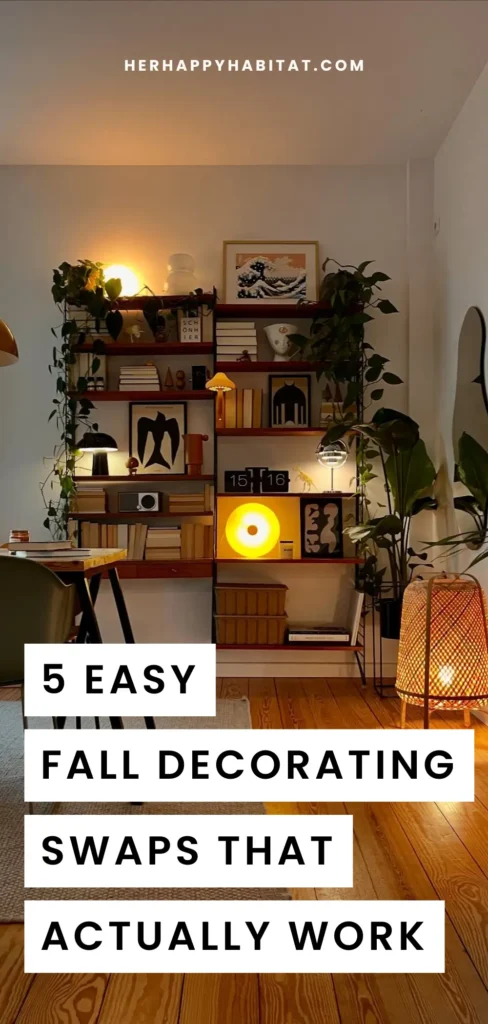

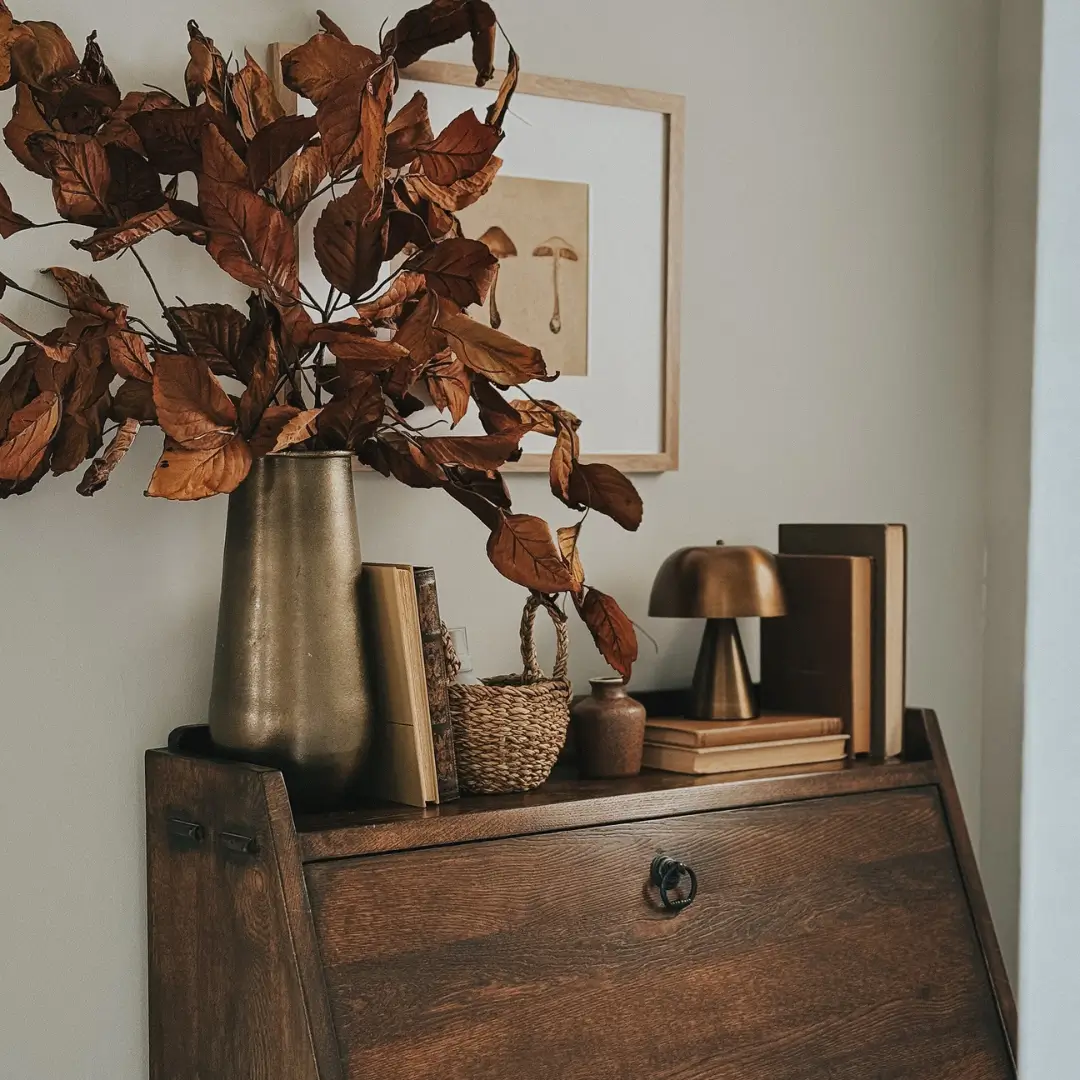
Every year around late August, something in me flips.
The iced coffee starts tasting wrong. I find myself lingering in the candle aisle like a woman with unfinished business.
And I open a closet I have not touched since March to find out where, exactly, I put the throw blankets.
This happens on a schedule. It is not romantic and it is not mysterious, and I have stopped pretending otherwise.
What I’ve noticed after a few years of documenting my own seasonal spiral is that the shift isn’t really about pumpkins. (Though I do own an unreasonable number of ceramic ones, and I stand by every purchase.)
It’s about weight. Summer decorating is light on purpose, all bare surfaces and open windows and nothing you’d have to dust around.
Fall decorating asks for the opposite. Texture. Layers. Rooms that feel like they’re holding something.
Designers have a tidier phrase for this than I do, which is “seasonal layering,” and if you’ve ever swapped one throw pillow in October and felt weirdly emotional about it, you already understand the concept better than any style guide could explain it.
So below, my full method for the fall changeover, plus the five swaps that do the most work for the least effort.
First, the method
I used to do the whole house in one Saturday. Bins down, summer things up, four hours of my life gone, and a living room that looked like a seasonal display in a garden center.
Now I do it in pieces, and the order matters more than the timing.
Light first, then textiles, then surfaces. Light changes how everything else reads, so doing it last means redoing half your decisions.
Textiles are what your body actually notices. Surfaces are the fun part and also the part where people go wrong, because it’s the easiest place to add too much.
Give it three separate evenings. You will not miss the Saturday.
1. Change the bulbs before you change anything else
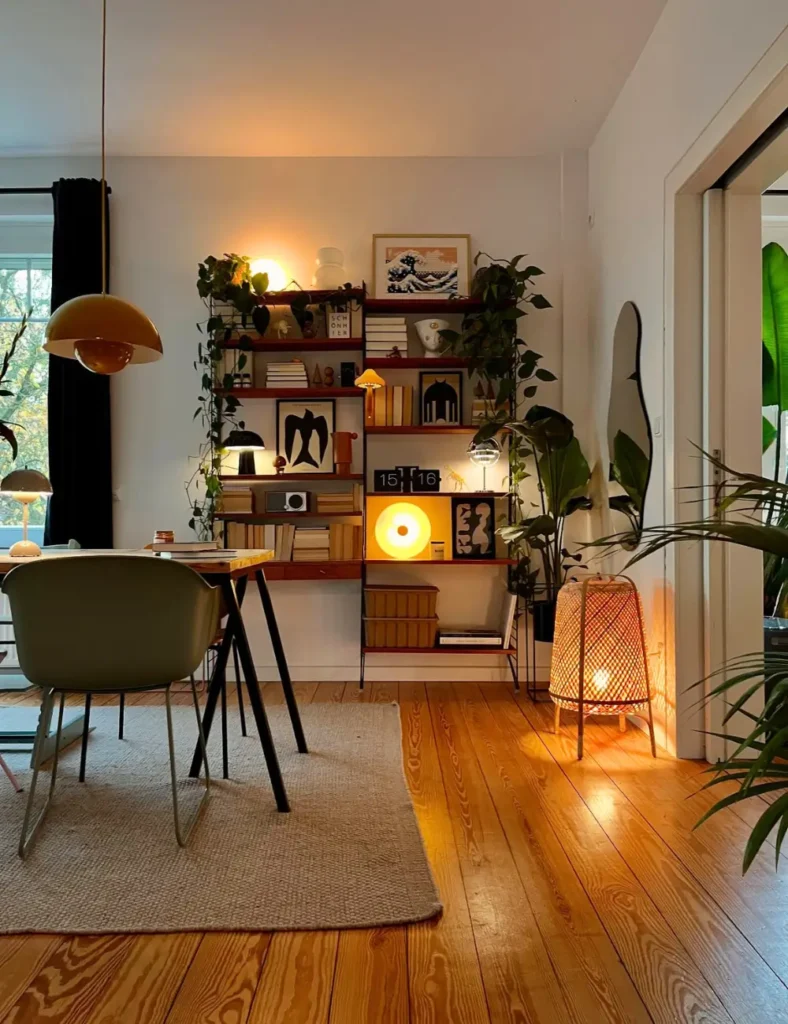
This is the one that sounds like filler and isn’t.
Most of us are running cool white bulbs from whenever we last thought about it, which is fine in July when there’s real light coming in until eight.
In October, cool white makes a room look like a place where you fill out forms.
Swap to something in the 2200K to 2700K range, and the same room reads warm without you touching a single object in it.
I switched to these warm white bulbs two years ago on a whim and genuinely thought I’d bought new lampshades.
2. Move the throw blankets out of storage and onto the furniture
Not folded in a basket, where they will stay pristine and unused.
Draped over the arm of the sofa, over the back of a chair, somewhere they look like they have already been used and will be used again.
The mistake I made for years was treating throws as decor that happened to be soft. They are soft things that happen to be decor.
If yours is too scratchy to actually fall asleep under, it is not doing its job, and no amount of artful draping will fix that.
Two per room is plenty. Three is where it starts looking like a linen sale.






3. Swap the covers, not the pillows
Pillow inserts are expensive and take up a shelf you do not have. Covers cost a fraction and store flat in a drawer.
Pick two or three in something with a bit of texture, a chunky weave or a slub linen or corduroy, and leave the rest of your cushions alone.
The whole point is contrast. If everything on the sofa is nubbly, nothing reads as nubbly.
I keep mine in a zip bag at the back of the airing cupboard, labeled, like a person who has her life together in exactly one narrow area.
4. Bring in something that is technically dying
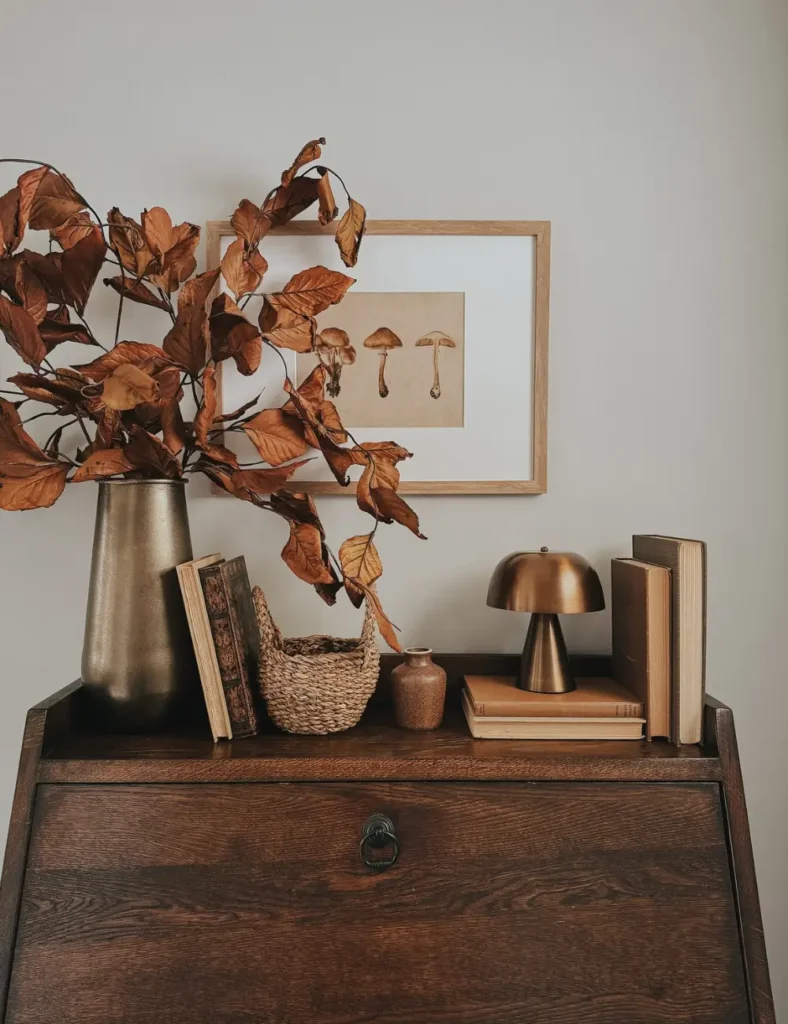
Branches. Dried stems. Anything from the eucalyptus and bunny tails family.
Fresh florals in fall always look slightly confused to me, like they showed up to the wrong season.
Dried and woody things suit the light better, they last for months, and they cost almost nothing if you are willing to cut a few branches on a walk.
I have never once been stopped.
One large arrangement in a heavy vase or dough bowl beats four small ones scattered around. Scale is what makes it look intentional rather than like you emptied your pockets after a hike.
5. Put something on the floor
The most overlooked one, and the one with the biggest payoff.
A runner in the hallway, a small rug layered over a larger one, a jute mat under the coffee table.
Floors are the largest uninterrupted surface in most rooms, and in summer we leave them bare because bare is cooler. In fall, bare just reads as unfinished.
You do not need a new rug. A runner you already own moved to a different room counts. Mine migrated from the bathroom to the front door and has been there ever since, which I’d call entryway decorating if I wanted to sound like I planned it.
What I skip
Scented anything in every room. Two candles in a house is atmosphere. Six is a headache with a price tag.
Themed everything. One shelf of seasonal objects is charming. A whole house of them means you’ll be putting it all away in eight weeks with a strong sense of regret.
And the full overhaul. I have never once finished a total seasonal changeover and thought, yes, worth the Saturday.
The closet is open again as I write this, and the throw blankets are already on the sofa where they will stay until roughly April.
That’s the entire transformation. Warmer bulbs, softer floors, one shelf of dried branches, and blankets that live where people sit. Three evenings, most of it things you already own.
Start with the bulbs. You’ll see what I mean about the lampshades.
ALSO WORTH A LOOK:
- How To Make Your House Smell Like Fall (Easy Ways That Actually Work)
- 17 Fall Bedroom Ideas That Will Make You Never Want to Leave Your Bed
- 21 DIY Fall Signs to Make Your Home Feel Cozy This Season
PIN FOR LATER 📌